Random quote of the day:


“I learned in Murder in the Cathedral that it’s no use putting in nice lines that you think are good poetry if they don’t get the action on at all.”

—T. S. Eliot, interview, The Paris Review, No. 21, Spring-Summer 1959


Disclaimer:  The views expressed in this random quote of the day do not necessarily reflect the views of the poster, her immediate family, Siegfried and Roy, Leonard Maltin, or the Mormon Tabernacle Choir. They do, however, sometimes reflect the views of the Cottingley Fairies.

Random quote of the day:


“Sometimes it’s important to work for that pot of gold.  But other times it’s essential to take time off and to make sure that your most important decision in the day simply consists of choosing which color to slide down on the rainbow.”

—Douglas Pagels, These Are the Gifts I’d Like to Give You

Disclaimer:  The views expressed in this random quote of the day do not necessarily reflect the views of the poster, her immediate family, Siegfried and Roy, Leonard Maltin, or the Mormon Tabernacle Choir. They do, however, sometimes reflect the views of the Cottingley Fairies.

My World Is Empty Without You

Random quote of the day:


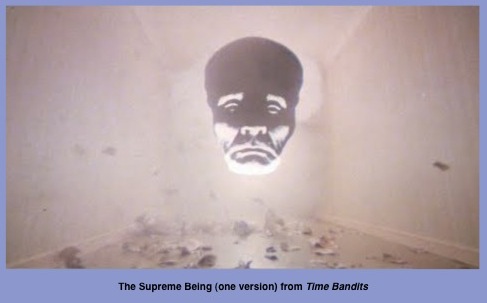
Wally: Do you mean you knew what was happening to us all the time?

Supreme Being:  Well, of course.  I am the Supreme Being.  I’m not entirely dim.

—Time Bandits


Disclaimer:  The views expressed in this random quote of the day do not necessarily reflect the views of the poster, her immediate family, Siegfried and Roy, Leonard Maltin, or the Mormon Tabernacle Choir. They do, however, sometimes reflect the views of the Cottingley Fairies.

“Oh, Min, you’re the cutest cat in the world.”

I believe this, so this is not a lie.

“Oh, Minnie Baby, you’re the cutest cat that’s ever lived.”

This is only a half lie. Every cat I’ve had has been the cutest cat that ever lived, so this may be a paradox, but only a half lie.

“Oh, sweetums, you’re the most beautiful cat in the world.”

Well, yeah, okay. Mother love and all that.

“Oh, baby love, you’re the smartest cat that’s ever lived.”

I have had a number of cats, some of them incredibly stupid (I loved them anyway), some of them smart, so I have a good basis for comparison. Min is one of the smartest cats I’ve had, so there is that. But that’s ever lived? I have no definitive, verifiable proof of that. There may be some mother love involved in this estimate.

“Oh, poobums, you’re the best cat in the world.”

Again, I believe this, so no lying is involved.

Photobucket

Here’s a meme I picked up from shalanna (who didn’t follow The Rules either. :-D)
The Rules:
Go to page 77 of your current MS.
Go to line 7.
Copy down the next 7 lines/sentences and post them as they’re written.  No cheating.


The current MS. being Shivery Bones, the one I am editing since I’m not writing anything new at the moment…

Here’s page 77, but not line 7.  Hey, I’m a writer.  I find it impossible to post something without context, so you’re getting the whole paragraph starting from line 4 and ending where it would have if I started on line 7 at the end of the next paragraph.  They are posted as currently written, however.

In this scene, Juana in 14th century Cordoba, Spain, is dying of consumption and has no one reliable to care for her four-year-old son, Estevan.  She has just asked Fraile Diego Gonçales, a traveling friar, to care for the boy, and has been coughing up blood.

“Mama’s all right,” she told him in a strangled voice, and reached for the wooden ball he’d let drop. “Here’s your ball, sweetheart.” She let him off her lap, and cleaned her mouth and hands with the cloth as best she could. Estevan took the ball, but a vague worry wormed through his heart. He stole anxious glances at her.

The friar studied them long and hard, his face at war with itself: pity, chagrin, compassion, irritation. Finally, in a dry voice, shaking his head, he asked, “Why would you trust such a precious boy to a stranger like me?”


ETA:  There’s something about posting that makes all the icky stuff show up.

 
“Mama’s all right,” she told him in a strangled voice, and reached for the wooden ball he’d let drop. “Here’s your ball, toy, sweetheart.” She let him off her lap, and cleaned cleaning her mouth and hands with the cloth as best she could. Estevan took the ball, but a vague worry wormed through his heart. He stole anxious glances at her.

The friar studied them long and hard, his face at war with itself: pity, chagrin, compassion, irritation. Finally, in a dry voice, s Shaking his head, he asked, “Why would you trust such a precious boy to a stranger like me?”

Random quote of the day:


“For what is truth? A story well told…The truth is, a story can have a life of its own. And the most factual accounts have a point of view (admitted or not, depending on the truthfulness of the narrator).”

—Elizabeth Cunningham, The Passion of Mary Magdalen


Disclaimer:  The views expressed in this random quote of the day do not necessarily reflect the views of the poster, her immediate family, Siegfried and Roy, Leonard Maltin, or the Mormon Tabernacle Choir. They do, however, sometimes reflect the views of the Cottingley Fairies.

Random quote of the day:


“Harmonies that are hidden are more powerful than those that are obvious.”

—Heraclitus, Fragment 54


Disclaimer:  The views expressed in this random quote of the day do not necessarily reflect the views of the poster, her immediate family, Siegfried and Roy, Leonard Maltin, or the Mormon Tabernacle Choir. They do, however, sometimes reflect the views of the Cottingley Fairies.

Okay, so the plot of that novel is nothing like any of my vampire novels (all 3-1/2 of them), but there are certain elements in the worldbuilding which really sounded familiar:

  • A 1500-year-old vampire
  • A group of powerful supernatural being overlords called the Congregation (mine was the Covenant)
  • Vampires who can eat normal food but don’t, mostly because the smell is abhorrent (especially garlic)
  • Vampire growth spurts, in which the vampire gets larger and more of an apex predator after being “changed” from mortal
  • Other piddling things that slip my mind at the moment

Now, none of these elements are earth-shatteringly similar, but chances are that if any of my vamp novels sees some form of publication someone will surely think I’ve ripped off Ms. Harkness, even though I did this worldbuilding twenty years ago now. It no longer depresses me when this sort of stuff happens, no longer even irks me especially hard, because I have been through this same thing so many times before. Seriously, click on the “simultaneous invention” tag if you want to listen to more hardcore whining on this subject. No? Can’t say as I blame you.

The thing is, the concept of simultaneous invention is quite well-known in science. And if it’s true for the tech fields, it’s also true for creative fields. It happens all the time—to me, to my friends, to writers and artists of all sorts. It’s just the way the zeitgeist operates, propagating certain ideas into the culture when their time has arrived. Some individuals are quick to pick up on them and “get them to market,” while others (like me) are painfully slow about the whole thing or otherwise blocked from getting their version before the public eye time. As with Ms. Harkness and I, nothing sinister is involved, no one has stolen anything.

Most of the time. Ideas do get stolen. It’s happened (verifiably) to friends of mine, it’s happened to me—which is one of the reasons I decided I didn’t want to be involved with Hollywood anymore. But most of the time, I firmly believe it’s just a case of that ol’ zeitgeist playing with folks, hoping somebody will take the idea ball and run with it.

The strangest example of this for me happened about a year before Close Encounters of the Third Kind came out. I started working on this idea about a guy name Roy who was a state trooper. One night when he’s out on patrol on a lonely stretch of highway, he has a close encounter with a bunch of UFOs that radically changes his life. He loses his job, his marriage breaks up, and he spends the rest of his time obsessing about and trying to solve the mystery of these strange alien craft. Sounds familiar, huh? I never heard a word about the movie in production until I was about six months into the worldbuilding on my own idea. The thing that is really freaky to me is that both my character and the Richard Dreyfuss character in Close Encounters had the name of Roy. The zeitgeist was working overtime on that one.

So, onward. If I do publish any of the old vampire stuff, I’m sure there are many elements in my books that have been used in other (and many) books since I first came up with the concepts. They can’t help but be labeled “derivative.” I guess the answer is to just keep writing new things, to keep moving forward.

Oh, and what did I think of A Discovery of Witches? I quite loved it, despite the cliffhanger ending. Which is all I’ll say about that ending—but you have been forewarned.

Random quote of the day:


“Self-plagiarism is style.”

—Alfred Hitchcock, The Observer, August 8, 1976


Disclaimer:  The views expressed in this random quote of the day do not necessarily reflect the views of the poster, her immediate family, Siegfried and Roy, Leonard Maltin, or the Mormon Tabernacle Choir. They do, however, sometimes reflect the views of the Cottingley Fairies.

Random quote of the day:


“Fame is a vapor; popularity an accident; riches take wings; the only earthly certainty is oblivion…”

—Horace A. Greeley, Recollections of a Busy Life

I’m fascinated by the way some quotes get transformed over time.  This quotation is often and widely misquoted as, “Fame is a vapor; popularity an accident; riches take wings; only character endures.”  Nice quote, but not exactly what Mr. Greeley said.

In Horace A. Greeley’s autobiography, Recollections of a Busy Life, he writes at the end of Chapter 18:

Fame is a vapor; popularity and accident; riches take wings; the only earthly certainty is oblivion; no man can foresee what a day may bring forth; while those who cheer to-day will often curse to-morrow: and yet I cherish the hope that the journal I projected and established will live and flourish long after I shall have mouldered into forgotten dust, being guided by a larger wisdom, a more unerring sagacity to discern the right, though not by a more unfaltering readiness to embrace and defend it at whatever personal cost; and that the stone which covers my ashes may bear to future eyes the still intelligible inscription, “Founder of the New York Tribune.”

Pithy stuff, huh?  And wow, amazing usage of commas and semi-colons, huh?  I think you can see why the full quote isn’t often used and has been amended with time. But where and when, that’s the question.

In A Memorial to Horace A. Greeley, published in 1873 shortly after Greeley’s death, Rev. E. C. Sweetser quoted Greeley’s autobiography:

Fame is a vapor; popularity and accident; riches take wings; the only earthly certainty is oblivion; no man can foresee what a day may bring forth; while those who cheer to-day will often curse to-morrow…

Sweetser went on to muse, “His character stands out in glorious colors before the world…”  Later he again quotes Greeley, talking about his life, saying he was “grateful that it has endured so long, and that it has abounded in opportunities for good…”

Somewhere between 1873 and 1900, the quote got switched up enough that Dr. John Barnett Donaldson in his sermon, “Through Thorns To A Throne,” (in The Two Talents, with Other Papers, Sermons, Leaders) turned part of Greeley’s words into a deathbed speech:

Horace Greeley sighed as he fell asleep, after a bad hour at the last, “Fame is a vapor; popularity an accident; riches take wings; those who cheer today will curse tomorrow; only one thing endures; character.”  He might have added that only one character survives oblivion, and that is Christ.

Dr. Donaldson is even more creative in the usage of semi-colons than Mr. Greeley.  I don’t know if Dr. Donaldson is the originator of the “character” variation on Greeley’s words—the Good Lord knows a poor, beset Rev is sometimes hard-pressed to get historical figures to spout the Proscribed Truth—but I know Donaldson’s variation has been amended and widely used since.  It has also been variously attributed to Mark Twain, Theodore Roosevelt, Harry Truman—and others, I’m sure.  In the case of Twain, he actually wrote in his Notebooks, “Fame is a vapor; popularity an accident; the only earthly certainty is oblivion.”  He was quoting Greeley, but many have not realized this and gone on to attribute the quote to Twain.  As to Roosevelt and Truman?  It sounds like something these gentlemen might have said, doesn’t it?  And in the vast world of misattribution, sometimes that’s enough to get someone’s name plastered on a quote.

Disclaimer:  The views expressed in this random quote of the day do not necessarily reflect the views of the poster, her immediate family, Siegfried and Roy, Leonard Maltin, or the Mormon Tabernacle Choir. They do, however, sometimes reflect the views of the Cottingley Fairies.

« Previous PageNext Page »