Random quote of the day:

“There is not one human creature in power who will not be modest enough to confess that he proceeds wholly upon a principle of corruption.”

—Jonathan Swift, letter to Lord Bolingbroke, April 5, 1729

corruption4WP@@@

Disclaimer: The views expressed in this random quote of the day do not necessarily reflect the views of the poster, her immediate family, Siegfried and Roy, Leonard Maltin, or the Mormon Tabernacle Choir. They do, however, sometimes reflect the views of the Cottingley Fairies.

Random quote of the day:

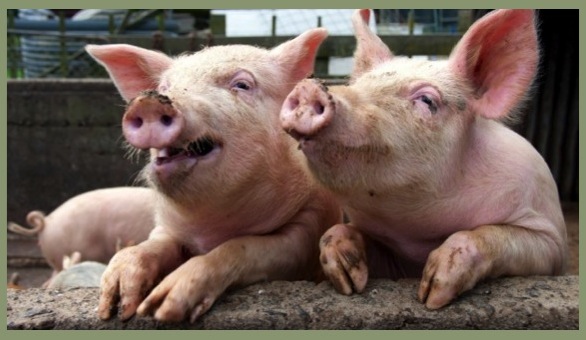
“Poets and pigs are only appreciated after their death.”

—Italian proverb

piggies4WP@@@

Disclaimer: The views expressed in this random quote of the day do not necessarily reflect the views of the poster, her immediate family, Siegfried and Roy, Leonard Maltin, or the Mormon Tabernacle Choir. They do, however, sometimes reflect the views of the Cottingley Fairies.

Random quote of the day:

“Love, I find, is like singing. Everybody can do enough to satisfy themselves, though it may not impress the neighbors as being very much.”

—Zora Neale Hurston, Dust Tracks On the Road

singing4WP@@@

Disclaimer: The views expressed in this random quote of the day do not necessarily reflect the views of the poster, her immediate family, Siegfried and Roy, Leonard Maltin, or the Mormon Tabernacle Choir. They do, however, sometimes reflect the views of the Cottingley Fairies.

Random quote of the day:

“There are days when solitude is a heady wine that intoxicates you with freedom, others when it is a bitter tonic, and still others when it is a prison that makes you beat your head against the wall.”

—Colette, Earthly Paradise

alone4WP@@@

Disclaimer: The views expressed in this random quote of the day do not necessarily reflect the views of the poster, her immediate family, Siegfried and Roy, Leonard Maltin, or the Mormon Tabernacle Choir. They do, however, sometimes reflect the views of the Cottingley Fairies.

Random quote of the day:

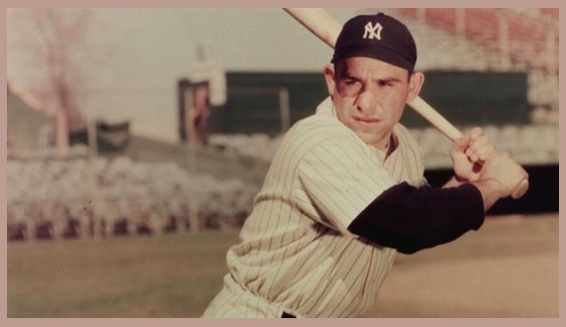
“I never blame myself when I’m not hitting. I just blame the bat and if it keeps up, I change bats. After all, if I know it isn’t my fault that I’m not hitting, how can I get mad at myself?”

—Yogi Berra, as quoted in Yogic Tales by William Warren Walton

blame4WP@@@

Disclaimer: The views expressed in this random quote of the day do not necessarily reflect the views of the poster, her immediate family, Siegfried and Roy, Leonard Maltin, or the Mormon Tabernacle Choir. They do, however, sometimes reflect the views of the Cottingley Fairies.

Random quote of the day:

“Of what significance is one’s own existence one is hardly aware, and it certainly should not bother the other fellow. What does a fish know about the water in which he swims all his life?”

—Albert Einstein, “Self-Portrait,” Out of My Later Years

fish4WP@@@

Disclaimer: The views expressed in this random quote of the day do not necessarily reflect the views of the poster, her immediate family, Siegfried and Roy, Leonard Maltin, or the Mormon Tabernacle Choir. They do, however, sometimes reflect the views of the Cottingley Fairies.

Random quote of the day:

“It is hard to master both life and work equally well. So if you are bound to fake one of them, it had better be life.”

—Joseph Brodsky, interview, The Paris Review, Spring 1982, No. 83

fake4WP@@@

Disclaimer: The views expressed in this random quote of the day do not necessarily reflect the views of the poster, her immediate family, Siegfried and Roy, Leonard Maltin, or the Mormon Tabernacle Choir. They do, however, sometimes reflect the views of the Cottingley Fairies.

Random quote of the day:

“When a man makes up his mind without evidence, no evidence disproving his opinion will change his mind.”

—Robert A. Heinlein, letter to John Presser, July 15, 1978

mind4WP@@@

Disclaimer: The views expressed in this random quote of the day do not necessarily reflect the views of the poster, her immediate family, Siegfried and Roy, Leonard Maltin, or the Mormon Tabernacle Choir. They do, however, sometimes reflect the views of the Cottingley Fairies.

Random quote of the day:

“You have to be a little patient if you’re an artist, people don’t always get you the first time.”

—Kate Millett, interview, On the Issues magazine, Vol. 10, 1988

patience4WP@@@

Disclaimer: The views expressed in this random quote of the day do not necessarily reflect the views of the poster, her immediate family, Siegfried and Roy, Leonard Maltin, or the Mormon Tabernacle Choir. They do, however, sometimes reflect the views of the Cottingley Fairies.

This post, in a slightly different form, was originally a contribution made to Dr. Beachcombing’s Bizarre History blog, January 22, 2012: “What Religion did Fairies Follow?”

🌚

While reading Legends of the Fire Spirits: Jinn and Genies from Arabia to Zanzibar by Robert Lebling I couldn’t help comparing and contrasting the way Islam views their versions of fairies and the way fairies are often regarded in such books as Eddie Lenihan’s collection, Meeting the Other Crowd. The priests in those Irish stories tell of fairies being a rather sad lot, knowing they’ll never gain salvation (because they aren’t human). This makes them inimical to good Christians everywhere. Similar themes have been reported in the Icelandic tradition. I must say, if I knew that the accident of my birth (as a fairy) would mean I’d be condemned at the End of Time, I might feel rather peeved myself and tend to act out in unpleasant ways against “the lucky ones.”

In Islam the situation is somewhat different, as this passage from Legends of the Fire Spirits shows:

The earliest Muslim interpretations of jinn regard them as having free will, like humans, able to choose between good and evil. The Qur’an itself has a chapter devoted to these spirit beings: Sura 72, Al-Jinn. This sura begins by mentioning a group of jinn who listened to the recitation of the Qur’an and decided to accept Islam…

An ancient mosque in Mecca is dedicated to the jinn who accepted the Prophet’s message. Masjid al-Jinn (Mosque of the Jinn) is either the locale where the jinn actually listened to the Prophet recite the Qur’an, or the place where he received revelation of the sura called Al-Jinn….

Richard Burton visited this mosque and wrote of it in Personal Narrative of a Pilgrimage to El-Medinah and Meccah.

Legends of the Fire Spirits again:

These jinn made a commitment to monotheism, the core of Islam. Other Qur’anic passages indicate that jinn had heard of earlier revelations, such as that of Moses and the Trinitarian doctrine of Christianity.

For Muslims, the beings we call jinn—however they may be conceptualised—are an integral and ever-present part of the language and theology of their faith. The existence of these creatures is assumed and reiterated numerous places in the Qur’an. The book, at its very outset, calls Allah rabb al’-alamin, ‘lord of the worlds,’ understood from the earliest days of Islam to mean all possible worlds that could exist, including the worlds of humans, of jinn and of heaven. The Qur’an often mentions mankind and jinn together as the two types of creatures capable of receiving—and accepting or rejecting—the divine message.

I’m also rather partial to the notion held in Morocco, and mentioned in The Caliph’s House: A Year in Casablanca by Tahir Shah, that it is the djinns themselves who decide whether a person is going to believe in them or not.

Also, both djinn and jinn are accepted spellings for these marvelous creatures. Being a contrarian, I of course prefer the more complicated spelling of djinn. I don’t suppose the djinns themselves care…or maybe they do. They are beings of remarkable discrimination, taste, talent, and free will.

« Previous PageNext Page »