Random quote of the day:

“Always we want to learn from the outside, from absorbing other people’s knowledge. It’s safer that way. The trouble is that it’s always other people’s knowledge. We already have everything we need to know, in the darkness inside ourselves. The longing is what turns us inside out until we find the sun and the moon and stars inside.”

—Peter Kingsley, In the Dark Places of Wisdom 

Disclaimer: The views expressed in this random quote of the day do not necessarily reflect the views of the poster, her immediate family, Bert and Ernie, Celine Dion, or the Band of the Coldstream Guards. They do, however, sometimes reflect the views of the Cottingley Fairies.

When I was thirteen or so I invited my friend Margaret over and we spent the whole day together, had dinner with my parents, then sat around the “campfire” in the backyard. This was an old metal barbecue that my father set up on the large concrete slab at the back of our house where we could burn wood and enjoy the balmy summer night air. Margaret was a tall, gangly, unstylish girl (I was also not particularly stylish) who wore her light brown hair in a bowl cut all through junior high and high school. I don’t know if that was a decision of her parents or not (they were quite strict). She had very straight hair, which would have been totally the style in the 60s and 70s if she had just let it grow out. She got made fun of. My recollection is that her family was large and rather poor. We weren’t rich, either, but we were hospitable. I was never invited to Margaret’s house. The very idea of inviting me seemed to make her nervous. Something odd there. I never figured out what and didn’t inquire. She craved love and friendship, a refuge from the teasing and disdain of the cruel teenage years. She was often downcast and depressed but lit up whenever anyone paid her attention.

She was one of my strays. I always brought kids home who were outcasts (like me), who the cool kids shunned. Or I invited them to spend school lunches with me and my outcast friends. (Lunching rituals were extremely important in junior high and high school.) Recently, I was talking about this to another friend I’ve known since I was twelve and she said, “You were always sort of the den mother of our little group,” and I guess I was. A very old pattern going back to at least elementary school. Which is odd, since I’m an introvert who treasures my alone time.

So, Margaret and I sitting by the fire. I don’t remember if she stayed the night, but we were staring at the flames and talking well into the night. Eventually, we lapsed into a pleasant silence, each in our own reverie. And from one moment to the next, I was there in the backyard and also inside the flames. I had a vivid, absolutely realer-than-real vision of myself tied to a stake while flames rose around me. In the vision, I was screaming and looking out at the faces of the people watching me burn—a nighttime sky, their faces made pasty by the light of the flames, yelling, “Burn, witch!” Their expressions were pure hate mixed with glee at the spectacle of my punishment. Just their faces. No details of clothing except I think it was dark. I even smelled flesh burning and knew it was mine. (It smelled of burned hot dogs and, no, we didn’t roast dogs that night.) The name “Sylvia Thackby” popped into my head, and I had the complete conviction that was my name and who I was.

Then it was done. So vivid, so intense, so real. I turned to Margaret feeling the panic bubbling inside me.

“What’s wrong?” she asked.

So I told her, all of it. I could see it bothered her a great deal, and why wouldn’t it? That was some crazy ass talk. (In retrospect I have to wonder if that’s why we stopped hanging around so much. She didn’t need a crazy person for a friend.) But I was full of manic enthusiasm. I wanted to research Sylvia Thackby. This was long before the internet, though, and I didn’t have the resources to travel to the kinds of libraries where I might get more information. I was just a kid. I had to let it go at the time. I have periodically fallen down the internet rabbit hole since and learned a few things.

First, accused witches in England and America were hung, not burned. The burning happened in Scotland and the Continent. So, if Sylvia existed she was probably in one of those places. My instincts even at the time of the vision told me it was the British Isles. The last legal execution of accused witches in Britain happened in the 17th century, and those accused were hung. (That doesn’t mean illegal burnings didn’t happen. They most assuredly did. In fact, a woman named Bridget Cleary was burned in Ireland in the late 19th century by her loving family who thought she was a changeling.)

Second, the name Thackby exists, but it’s not common. Most of the scraps of information I’ve found seem to settle in the Yorkshire area. Yorkshire was a hotbed of witch belief in the 17th century (probably earlier and later as well), but most legal executions there were hangings, I believe. I did find a list of servants from an estate in Warwickshire called Finham Park (from the Stoneleigh Parish Census of 1861). A young cowman named Christopher Kirby employed there  listed his birthplace in 1844 as Thackby in Oxfordshire. (An infamous unsolved murder of a supposed “wizard” occurred in Warwickshire in 1945, so it was not without its own witch hysteria.) A Google search of “Thackby Oxfordshire” brings up information on a town called Beckley, but no mention is made of Thackby in the Wikipedia article, so I don’t know what that’s all about. I do know that on July 26, 1640, Thomae Thackby baptized his daughter Maria in the Yorkshire parish of Kirk Ella, which until 1878 covered a seven mile area including part of what is now the Newington Parish of Hull and surrounds. The records of Kirk Ella stretch back to 1558. Witchcraft was made a capital offense in Britain in 1563. Also, I learned that a soldier named Levi Berry was K. I. A. in World War I in 1916. He enlisted in 1915 and his papers list his birthplace as “Thackley – Bradford – Yorkshire” where he was born on July 28, 1890. I even found one entry for a current resident of Hull with the last name of Thackby (first initial only), but I would never bother him or her with anything so foolish. This is my airy fairy obsession, after all, and nothing to do with that poor soul.

Third, the name Sylvia was not common in the British Isles until maybe the 18th century and that was mostly amongst the nobility and the rich. Sybil would have been a more likely name for a commoner and I got the distinct impression my girl was a commoner.

So I know a lot more than I did on that long ago campfire night but still not much. It has led to a lifetime fascination with witch accusations and persecutions. (The Devil in Massachusetts by Marion L. Starkey was the first nonfiction book I read cover to cover.) And I have always had a morbid fear of fire. Still, it could all be an elaborate hypnagogic vision that my neurodivergent brain turned into an obsession. I want to say that I don’t think so, that it has always from that night on carried the heavy internal weight of conviction, but who can say? That vision or dream or memory is as vivid today as it was that night.

I still need to check alternate spellings of Thackby (there are a number) and the genealogical sites but this is a casual obsession nowadays. I don’t really expect to find Sylvia Thackby no matter the spelling. If she existed, she was probably an outcast, some poor, odd or odd-looking woman who lived on the margins. Such people don’t leave historical records. Although the Scots and English kept good records of who they persecuted, many records were lost and it’s very possible Sylvia’s execution was vigilantism rather than de jure. But I’ll probably keep searching in my haphazard way. For one thing, it’s always fascinating to look.

And what about Margaret? We hung out a lot in junior high, but when we transferred to the larger student population of Venice High we kind of lost touch. We’d see each other now and then but had different friend groups. It happens. After graduating high school I only saw her one more time. About a year and a half later she called me out of the blue and asked if she could come over and introduce me to her…baby.

I was gobsmacked, to say the least, but I said sure. She arrived with a chubby baby in tow—about 9 or 10 months I’d say—but I can’t remember if it was a boy or a girl. (I’m going to call him a him since I don’t want to say “it.”) She’d finally let her hair grow and looked much more in the mode of the day, but still hardly stylish. She said she’d gotten pregnant by some guy who declined to marry her. Maybe it was still under negotiation, maybe a done deal. I wish I remembered. I felt sorry that she had the responsibility of raising a child on her own at such a young age. That feeling was counterbalanced by her excitement over the baby and the incandescent love on her face when she looked at him. Finally, here was someone she could love with all her heart who loved her back and needed her as much as she’d always wanted. She left, we promised to call, we never did, and I never saw her again. The usual casual carelessness of youth.

Margaret is lost to my personal historical record. I could probably find a trace of her if I wanted to join Facebook (I do not) or one of those alumni associations (again, no). I don’t imagine that incandescence lasted. It rarely does in life. But I can hope it did, can’t I? I can hope that the flames of life never reached her, the burning joy remained. I feel somewhat guilty that I don’t know. Then again, maybe it’s best I don’t. Some searches are best left abandoned.

 

Random quote of the day:

“Forever – is composed of Nows —
‘Tis not a different time —”

—Emily Dickinson “Forever is composed of Nows”

Disclaimer: The views expressed in this random quote of the day do not necessarily reflect the views of the poster, her immediate family, Bert and Ernie, Celine Dion, or the Band of the Coldstream Guards. They do, however, sometimes reflect the views of the Cottingley Fairies.

Random quote of the day:

“During the 60’s, I think, people forgot what emotions were supposed to be. And I don’t think they’ve ever remembered. I think that once you see emotions from a certain angle you can never think of them as real again.”

—Andy Warhol, The Philosophy of Andy Warhol 

,

Disclaimer: The views expressed in this random quote of the day do not necessarily reflect the views of the poster, her immediate family, Bert and Ernie, Celine Dion, or the Band of the Coldstream Guards. They do, however, sometimes reflect the views of the Cottingley Fairies.

Random quote of the day:

“No pain means the end of feeling; each of our joys is a bargain with the devil.”

—Charles Bukowski, Notes of A Dirty Old Man

Disclaimer: The views expressed in this random quote of the day do not necessarily reflect the views of the poster, her immediate family, Bert and Ernie, Celine Dion, or the Band of the Coldstream Guards. They do, however, sometimes reflect the views of the Cottingley Fairies.

Random quote of the day:

“What everyone ignores—that’s where wisdom lies.”

—Peter Kingsley, In the Dark Places of Wisdom

Disclaimer: The views expressed in this random quote of the day do not necessarily reflect the views of the poster, her immediate family, Bert and Ernie, Celine Dion, or the Band of the Coldstream Guards. They do, however, sometimes reflect the views of the Cottingley Fairies.

I have written about weird things before but for the purpose of this project I am going to repost and rework those posts under the “all weird things” tag. This is the first of those posts:

We’ve all probably had a number of things in our lives that made us go “huh.” I know I have. I embraced the weird some time back, and even though I always try to find logical explanations before accepting anything para-weird, there is always going to be stuff that skirts the edge of rational and . . . other.

One such incident happened when I was about thirteen at our old house in Venice, the one I grew up in, which was in itself a strange place full of odd corners and unusual atmospherics. We lived on a huge lot with a big house on the front of the property occupied by our landlady. Our house was a little ramshackle place with four front doors because its basic structure consisted of four beach cabins strung together to make a house. (Beach cabins: those things from the early 20th century set up on the sand where people would go to change out of their street clothes and into swimwear so they didn’t have to immodestly walk from their vehicles to the shore in “scanty” clothing.)

A prodigious backyard sat behind our little house in which my father grew a legendary vegetable garden every year. A large but very old and dilapidated shack sat at the very back of the southwest corner of the lot where my father kept tools and such. It hadn’t seen paint in centuries, it seemed, the wood chipped and splintered and that wonderful grey barnwood patina people pay big money to acquire these days. Between the back of the shack and the next property over (a dairy processing plant) was a passageway about five feet wide. My father put trellis up on the shed back there and grew banana squash, letting them crawl up the trellis rather than spread across the ground. I liked to sit back there in the summertime because it was always cool, even on the hottest days, and smelled loamy and of growing green things. It was one of many small, urbanized sacred combes I had on that property—but not a perfect spot.

We had the dairy processing plant to contend with, for one. Just across from the growing banana squash was a two-foot high concrete boundary marker topped by an enormous chain link fence—at least twenty feet high—that ran the entire length of the back end of our property. The fence was loose enough at the bottom that I could push it inward and sit on that concrete ledge to stare at and smell the growing things, wiggle my toes in the loamy earth, and think my solitary thoughts. Just the other side of the fence on the dairy property was a massive ice freezer and ice crusher machine. Again, it was at least 15-20 feet high, but seemed larger because the boundary marker was part of an elevation of the land between our property and the dairy. It towered, to say the least. Another fence sat behind the southern end of the thing, as well. A very narrow passageway ran the length of this monster, maybe three feet wide at most. A grown person would have had to walk sideways to go back there. There was a long freezer compartment (maybe 30 feet?) which held big blocks of ice, and on the front end a platform and some ice crushing machines. The dairymen hauled out these blocks of ice, crushed them (usually at about 3 a.m.), and loaded it into bags so they could pack their trucks (parked along the northern length of our property) and keep their dairy products cool while they made their early morning deliveries.

(The ice crusher was also part of a harassment campaign because the dairy wanted to force our neighbors and our landlady to sell the property cheap so they could gobble up the entire block—but that’s a separate story. Suffice it to say, it didn’t work because we were all extremely stubborn and adaptable poor people.)

Anyway, I was in the backyard proper one day, lying on the grass the other side of the garden, reading (though I don’t remember the book) but also feeling restless. That kind of restlessness that’s an itch just beneath the skin. A disease common in early adolescence, I believe. I put the book down wondering what I could do with that restlessness when I became aware of—how to put this?—another consciousness inside my brain. Yeah, I know. I’ve only experienced such a thing a few times in my life, mostly in connection with premonitions, but it’s a very distinct feeling. A restless itch of the mind, if you will. It was telling me to get up and go behind the shed to my sacred spot and if I did, something would happen. There would be a gift there for me. It scared me, frankly. I remember thinking that I didn’t want to be kidnapped by aliens or other things, but the consciousness was reassuring and insistent. So I got up, walked through the garden, and behind the shed.

I stood there a minute thinking, “Okay, I’m here, now what?” I walked down to the end of the passage where our property ended and the low fence of our southern neighbor started. I turned around and looked back the way I’d come but . . . nothing. Then I glanced to my left. Lying on the ground, just the other side of the chain link fence, was a black, leather-bound notebook, maybe 6×4 inches. It looked brand new so I reached under the loose links at the bottom of the fence and pulled it through. It was a spiralbound notebook and full of crisp, new ruled paper—and completely blank. No writing inside, nothing to identify an owner. Like I said, an adult would have had to walk sideways along the passage beside the ice crusher, and this notebook was deposited at the very end of the freezer compartment about a foot from the other fence that ran behind the monster. It wasn’t something someone could have dropped from the platform. They would have had to purposefully sidle down that passage for it to be there. It’s entirely possible that someone could have slithered down there to take a secret whizz (although why go so far?) or maybe someone came back there to spy on our and our neighbor’s property (given the underhanded nature of the dairy owners) but . . .?

I dunno. All I know was that I was delighted with the notebook. Although I had known I wanted to be a writer since the second grade, I was flailing around about it at that stage of my life and getting a lot a flak from my mother about how impractical my expressed career goal was and what a foolish dream and etc. That notebook seemed like an important piece of encouragement to me at the time. I wrote a lot after that, despite discouragement. I’ve never really stopped, although I have had a couple of bouts of prolonged writers’ block wherein that restless itch beneath the skin became agonizing. Writing has always been the cure for that.

And remembering this incident also reminded me of something I encountered recently in my reread of Patrick Harpur’s Daimonic Reality:

I have long thought of my art (any art, all art) as an act of worship—or if that’s too strong a word, an act of gratitude and devotion. To whom? The Universe for giving me this means of scratching that itch? Maybe. It doesn’t even matter if it’s good art or bad, whether or not you’re acknowledged publicly in galleries or publishing houses and the like, the act of doing of art shows the Universe that you have the passion and the practice of that devotion. The doing is the important part. That’s why I’m an emotional wreck when I’m not doing that work and why I’m always supremely grateful when it comes back to me.

That notebook long ago was something of a talisman. I may still have it buried somewhere around here, though I haven’t seen it in years. But like any talisman it was good for the time in which it came to me and lasted as long as I needed to look on it and be encouraged. It was indeed a gift, whether from the Universe, some mysterious being, or from some random dude taking a whizz out behind the ice crusher.


Random quote of the day:

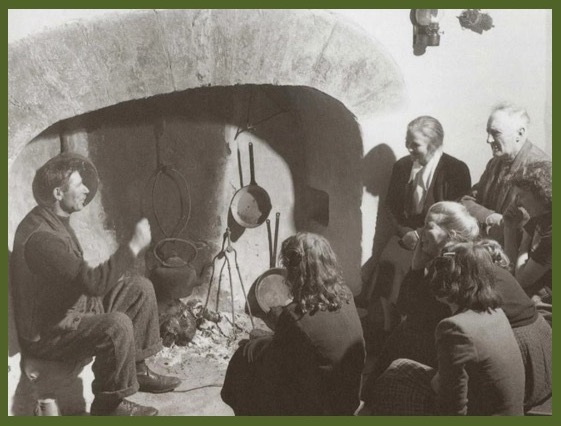
“Good seanchaidhthe—storytellers—never really tell you anything…. They set the fire in the hearth; they draw the chairs in close; they shut all the windows so the old lore doesn’t fall in the wrong ears. They fill the room with a sense of ease, a sense of all being as it should be. The words, when they spill quietly out of the mouth of the one who has been entrusted with them, dance in the space, at one with the flames of the fire. It is, as always, up to those who listen to do with them what they will.”

—Kerri ní Dochartaigh, Thin Places

Disclaimer: The views expressed in this random quote of the day do not necessarily reflect the views of the poster, her immediate family, Bert and Ernie, Celine Dion, or the Band of the Coldstream Guards. They do, however, sometimes reflect the views of the Cottingley Fairies.

Random quote of the day:

“I have known books written on Tolerance, the proper title of which would be — intolerant or intolerable books on tolerance.

―Samuel Taylor Coleridge, Table Talk

Disclaimer: The views expressed in this random quote of the day do not necessarily reflect the views of the poster, her immediate family, Bert and Ernie, Celine Dion, or the Band of the Coldstream Guards. They do, however, sometimes reflect the views of the Cottingley Fairies.

For as far back as I can remember whenever I’ve closed my eyes in preparation to sleep the faces of strangers appear in my mind’s eye—like on the cinema screen behind my eyelids. They stare down into my face, quite close. Sometimes they back off and I see details of their clothing—from many different eras, but mostly the 20th and 21st centuries. (As I write this the vivid memory of a blonde curly haired girl in a red fifties-style flare dress with large white polka dots comes to mind. Her hair was just above her shoulders, and she wore a white headband. She looked to be in her twenties.)

These people almost always have serious or concentrated expressions. I can’t recall an instance of them smiling, though sometimes they just have a curious neutrality. It’s as if they want something from me but I never know what. Maybe just to give them a spot of attention? They know, I’m convinced, that I see them with my eyes closed but not with my eyes open and want to get that attention while they can, though sometimes they seem genuinely surprised to be perceived. They never stay long, and I rarely feel anything menacing, just their passing flare of interest before they move on. These are people I’ve never seen before in my life or since. It isn’t a nightly occurrence, but a fairly frequent one.

I used to think this happened to everyone. Diana Gabaldon even talked about it in one of her Outlander novels. But when in my latter years I mentioned it to friends—“You know that thing where sometimes when you close your eyes you see the faces of strangers?”—they were incredulous. “No,” they said, “that’s never happened to me.”

So I realized that my eyelid friends were one of those things—like styles of thinking—that we assume are universal, a part of everyone’s experience, because we only live inside our own heads and can’t know how others perceive the world. I didn’t learn until fairly recently, for instance, that not everyone has a constant running monologue in their head.  I started seeing articles about it. I was dumbfounded. It made me think of my friend who has synesthesia. She didn’t realize when she was little that not everyone had specific colors attached to each letter in the alphabet or that sometimes words had a vague flavor to them. The chatterbox in my mind doesn’t drive me crazy because I’m used to this state of being but it is always narrating. (Okay, yeah, when I’m in a worry cycle it does drive me crazy, but I’ve developed coping mechanisms.) (And yes, my synesthesia friend also has a running monologue in her head.)

So I wasn’t worried about all those strangers clamoring for my attention. I didn’t know any better for most of my life and once I knew it wasn’t that way for everyone I was curious as to what it was but still not alarmed. I did wonder if it was some weird way of seeing spirits of the dead but didn’t really pursue that. Until I mentioned it to a witch acquaintance I had at the time (we’re no longer in communication) who practiced necromancy.

“Transient spirits,” she said. “They are attracted to you because they know you can see them, but you have to be careful. They can suck your energy, make you sick, and do other harm if you don’t protect yourself.”

For the first time in my life I became uneasy with them. She was a necromancer so she had to know more about this than I, right? Forget the fact I’d never perceived harm from these folks, I took this unsolicited advice to heart. From that point on whenever the strangers showed up I’d say, “You’re not welcome here. Go away.” Poof! They were gone. Their visits got less and less frequent then stopped altogether. But the funny thing was I missed them. I felt bereft of these “companions,” as if something essential had been taken from me. Worse, that I’d taken it from myself on the advice of someone who was just guessing.

I started saying to the Great Whatever, “I welcome all spirits who mean me no harm,” but the damage had been done. They didn’t return. And, of course, I don’t really know if they were spirits at all. They could have been an aspect of my active imagination and I’ve wondered since if that’s a component in why I sometimes struggle more with my creative work then I used to.

I want them back, those strange transient companions. It’s not the only time I have forcefully shut down an “ability” because I got uncomfortable, but that’s a story for another day. Today I’ll just say that the mind is a curious enclosure and we all live in an illusion of the world to one degree or another. We can only perceive the world as our minds allow us and can never truly participate in the thought processes of anyone else. Perception is a closed circle—or more precisely, perhaps, a labyrinth in which we wander endlessly.

« Previous PageNext Page »