crow

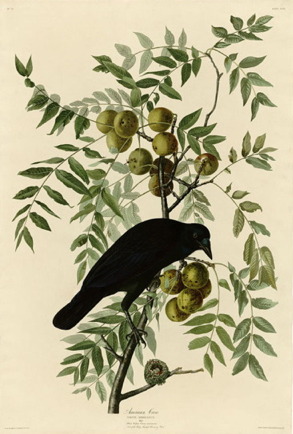
I love crows. I’m fascinated by them, although I never lose track of the fact that although they are intelligent and amazing animals, they are wild, and they are predators as well as scavengers. They survive in the real world any way they can—picking up road kill and pet food left outside, catching smaller birds and critters to eat. Whatever it takes.

In mythology, crows are often trickster deities. As the name implies, these deities exist to play tricks on humankind, but the tricks have a deeper meaning. They put people on alert to the shifting nature of reality, reminding them not to get so caught up in the surface of things, to not always believe what your eyes tell you. Beware. Be smart. Do what needs to be done. That’s how you survive.

♣

It’s a tricky business when a human strikes a deal with a trickster. You may get what you asked for, but it won’t necessarily be in a form that’s any good to you, or it may come at a time when you no longer want it or need it. Knowing this, I saw a crow outside my window one day at work and thought how lovely one of his shiny black feathers would be in an art piece I was working on. So I thought, what the hell? I’ll ask him. (In my mind, of course, so my officemate wouldn’t think I was crazier than she already thought.)

“Mr. Crow, I would like one of your shiny black feathers to use in an art piece. If you agree to send me a feather, I will burn sage and juniper leaves in your honor.”

I waited for my feather. At lunchtime I even walked beneath his tree looking for it. No feather. I laughed at myself, but that night I burned the sage and juniper anyway. No feather. I stopped looking for it.

About three weeks later I was driving down the busy thoroughfare of Olympic Boulevard, late to a doctor’s appointment I absolutely had to make. The boulevard has a wide, parklike strip of green down the middle dividing the eastbound and westbound traffic, but absolutely no parking on that section of the street. I pulled to a stop at a light, not thinking about anything in particular except how late I was and what a hurry I was in. The light turned green and I stepped on the gas—and at just that moment a lovely, shiny black crow feather seemed to appear out of nowhere, blowing along the green strip of grass just beside my car.

In about five seconds flat I had a decision to make: do I stop the car in the intersection and run after the feather, provoking outrage in the cars behind me; or go east to the nearest turn around, come back and search for the feather, provoking the drivers on that side of the boulevard; or do I let the feather go and proceed to my appointment? Most people who have heard this story say at this point, “You should have stopped for the feather!” But in the seconds required to make my decision, I had an epiphany. I had to let the feather go. It was not that I had asked too much of Mr. Crow. He had been willing to give the feather, but wanted me to appreciate his cosmic joke. It was as if he said, “You make the decision whether you want to live in the world, or in the spirit world. The choice is yours, and my feather is the symbol.” On this day, I chose to live in the world, and continued on to my doctor’s appointment.

I laughed long and hard at the splendid joke I’d played on myself. The trickster cannot trick us unless we are willing participants. We are the ultimate cosmic jokers on ourselves. In the years since, I’ve also realized the other part of this lesson is that we sometimes have to let go of our notion that we can control life, nature, the randomness of events. . . anything, really. If we’re going to keep our sanity, we have to reconcile ourselves to this fundamental lack of power, and learn to live with life’s basic unpredictability. We have to be careful not to buy into the illusion of the world, of controlling and bending nature (life) to our will.

♣

And so there came a day I told this story to F. while walking back to Avalon from the Wrigley Monument on Santa Catalina Island. She appreciated the irony and we laughed a great deal when I got to the part where the feather blew in front of my car and I had to leave. At that precise moment, the crows in the eucalyptus trees lining our path joined in, breaking into a loud and raucous cawing as we passed.

♣

And so there came another day when I realized once and for all that a relationship had ended. It was a painful ending to an association that never stood much of a chance, but I’d walked into it with eyes wide shut, believing I could make of it what it wasn’t. On that day, I knew I had to give it up, that it had never really been mine. As I walked back to my car, I thought about the lessons of the tricksters and how very badly I had fooled myself. There on the ground, centered just behind my car’s back bumper, was a lovely, shining black crow feather.

 

Random quote of the day:

“What is a diary as a rule? A document useful to the person who keeps it, dull to the contemporary who reads it, invaluable to the student, centuries afterwards, who treasures it.”

—Dame Ellen Terry, quoted in The Assassin’s Cloak: An Anthology of the World’s Greatest Diarists, eds. Irene & Alan Taylor

 diary4WP@@@

Disclaimer: The views expressed in this random quote of the day do not necessarily reflect the views of the poster, her immediate family, Siegfried and Roy, Leonard Maltin, or the Mormon Tabernacle Choir. They do, however, sometimes reflect the views of the Cottingley Fairies.

Random quote of the day:

“They say that truth is naked. I cannot admit this for any but abstract truths; in the arts, all truths are produced by methods which show the hand of the artist.”

—Eugène Delacroix, journal, October 12, 1859

naked4WP@@@ 

Disclaimer: The views expressed in this random quote of the day do not necessarily reflect the views of the poster, her immediate family, Siegfried and Roy, Leonard Maltin, or the Mormon Tabernacle Choir. They do, however, sometimes reflect the views of the Cottingley Fairies.

Random quote of the day:

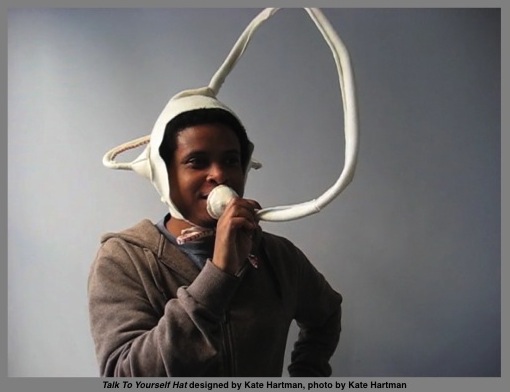
“I believe that in your life, in your thoughts when you are alone, you are always addressing yourself to somebody.”

—Nadine Gordimer, The Paris Review, Summer 1983, No. 88

 talk4WP@@@

Disclaimer: The views expressed in this random quote of the day do not necessarily reflect the views of the poster, her immediate family, Siegfried and Roy, Leonard Maltin, or the Mormon Tabernacle Choir. They do, however, sometimes reflect the views of the Cottingley Fairies.

Random quote of the day:

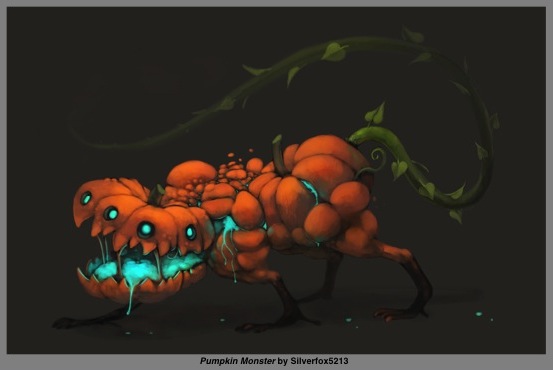
“Is it better to out-monster the monster or to be quietly devoured?”

—attributed to Friedrich Nietzsche

 monster4WP@@@

Disclaimer: The views expressed in this random quote of the day do not necessarily reflect the views of the poster, her immediate family, Siegfried and Roy, Leonard Maltin, or the Mormon Tabernacle Choir. They do, however, sometimes reflect the views of the Cottingley Fairies.

Random quote of the day:

“If a man sees Truth in the morning, he may die in the evening without regret.”

—Confucius, The Analects

truth4WP@@@ 

Disclaimer: The views expressed in this random quote of the day do not necessarily reflect the views of the poster, her immediate family, Siegfried and Roy, Leonard Maltin, or the Mormon Tabernacle Choir. They do, however, sometimes reflect the views of the Cottingley Fairies.

men-an-tol

In a vaguely Halloween-themed way, I thought I’d share some quotations from my current reading.

Leechcraft: Early English Charms, Plantlore, and Healing by Stephen Pollington

Another passage from Aelfric [Aelfric of Eynsham, c. 955-c.1010, a Christian homilist] includes the following aside:

Witches still travel to where roads meet and to heathen graves with their illusory skill and call out to the devil and he comes to them in the guise of the person who lies buried there, as if he would arise from the dead—but she cannot really make it happen, that the dead man should arise through her wizardry.

Because for Christians, there are no such things as ghosts, see? When a person dies, they either go to Heaven, Hell, or Purgatory. Anything that sticks around in this realm must therefore be an evil spirit, bent on tricking the living into believing things that are not Christian doctrine and thereby condemning their souls.

More on crossroads:

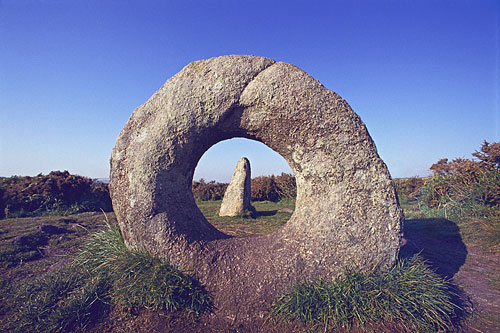
The association of witchcraft with burial at crossroads is interesting for it was traditionally reserved for those whose presence might defile holy ground if buried in a churchyard, such as heathens, witches, and various classes of criminal. Aelfric deplored the practice of certain women who went to crossroads and “drew their children through the earth”, perhaps similar to the Cornish tradition of passing a child through a stone with a suitable hole in it, such as the famous Men-an-Tol alignment on the Penwith peninsular; a kind of re-absorption and rebirth seems to be implied by the practice….

[A. L.] Meaney [in Women, Witchcraft and Magic in Anglo-Saxon England] cites an East Anglian parallel, where a sick child was placed head-down in a hole cut into the ground and covered with the turf, and that of making the child crawl beneath a bramble which is rooted at both ends. Contact with the earth—and so possibly transference of the disease—seems to be the constant factor. Or is this symbolic rebirth, leaving the affliction behind in the putative womb?

To which I would add, “Eeeeyorgh!” Tough to be a sick child back in the day. Truly spooky.

Ancient Christian Magic: Coptic Texts of Ritual Power edited by Marvin Meyer and Richard Smith

Or perhaps you’d like a Christian spell for protection against headless powers, because—Lord knows—that’s a common experience for all of us [Egyptian papyrus, 5th or 6th century]:

O angels, archangels, who guard the floodgates of heaven, who bring forth the light upon the whole earth: Because I am having a clash with a headless dog, seize him when he comes and release me through the power of the father and the son and the holy spirit, Amen.

AO, Sabaoth.

O mother of god, incorruptible, undefiled, unstained mother of Christ, remember that you have said these things. Again, heal her who wears this, Amen.

As for myself, I’m going to employ the following amulet, one to protect the entrance to a house from vermin [papyrus, 6th (?) century], that invokes Aphrodite, Horus, the Judeo-Christian deity, Yao Sabaoth Adonai, as well as the Christian St. Phocas, covering all the bases. It has nothing to do with ghosts and goggilies, but is personally appealing:

The door, Aphrodite,
Phrodite,
Rodite,
Odite,
Dite,
Ite,
Te,
Te,
E,

Hor Hor Phor Phor, Yao Sabaoth Adonai, I bind you, arte[m]isian scorpion. Free this house of every evil reptile [and] annoyance, at once, at once. St. Phocas is here. Phamenoth 13, third indication.

Random quote of the day:

“A sheltered life can be a daring life as well. For all serious daring starts from within.”

—Eudora Welty, “Finding A Voice,” One Writer’s Beginnings

sheltered4WP@@@

Disclaimer: The views expressed in this random quote of the day do not necessarily reflect the views of the poster, her immediate family, Siegfried and Roy, Leonard Maltin, or the Mormon Tabernacle Choir. They do, however, sometimes reflect the views of the Cottingley Fairies.

Random quote of the day:

“All the concerns of men go wrong when they wish to cure evil with evil.”

—Sophocles, The Sons of Aleus, Fragment 77 (tr. Loeb Classical Library)

 goodevil4WP@@@

Disclaimer: The views expressed in this random quote of the day do not necessarily reflect the views of the poster, her immediate family, Siegfried and Roy, Leonard Maltin, or the Mormon Tabernacle Choir. They do, however, sometimes reflect the views of the Cottingley Fairies.

Random quote of the day:

“Only bad writers think that their work is really good.”

—Anne Enright, “Ten Rules for Writing Fiction,” The Guardian, 19 February 2010

 bad4WP@@@

Disclaimer: The views expressed in this random quote of the day do not necessarily reflect the views of the poster, her immediate family, Siegfried and Roy, Leonard Maltin, or the Mormon Tabernacle Choir. They do, however, sometimes reflect the views of the Cottingley Fairies.

« Previous PageNext Page »