Random quote of the day:

“My Journal is that of me which would else spill over and run to waste, gleanings from the field which in action I reap. I must not live for it, but in it for the gods. They are my correspondents, to whom daily I send off this sheet postpaid.”

—Henry David Thoreau, journal entry, February 8, 1841

 gods4WP@@@

Disclaimer: The views expressed in this random quote of the day do not necessarily reflect the views of the poster, her immediate family, Siegfried and Roy, Leonard Maltin, or the Mormon Tabernacle Choir. They do, however, sometimes reflect the views of the Cottingley Fairies.


Random quote of the day:

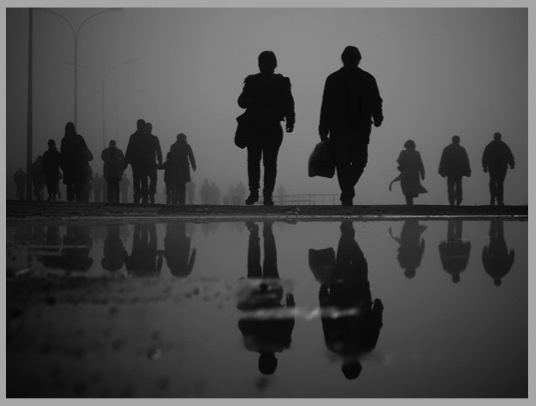
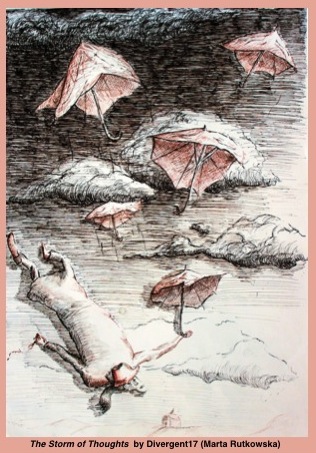
“Life does not consist mainly—or even largely—of facts and happenings. It consists mainly of the storm of thoughts that is forever blowing through one’s head.”

—Mark Twain, Autobiography

storm4WP@@@ 

Disclaimer: The views expressed in this random quote of the day do not necessarily reflect the views of the poster, her immediate family, Siegfried and Roy, Leonard Maltin, or the Mormon Tabernacle Choir. They do, however, sometimes reflect the views of the Cottingley Fairies.


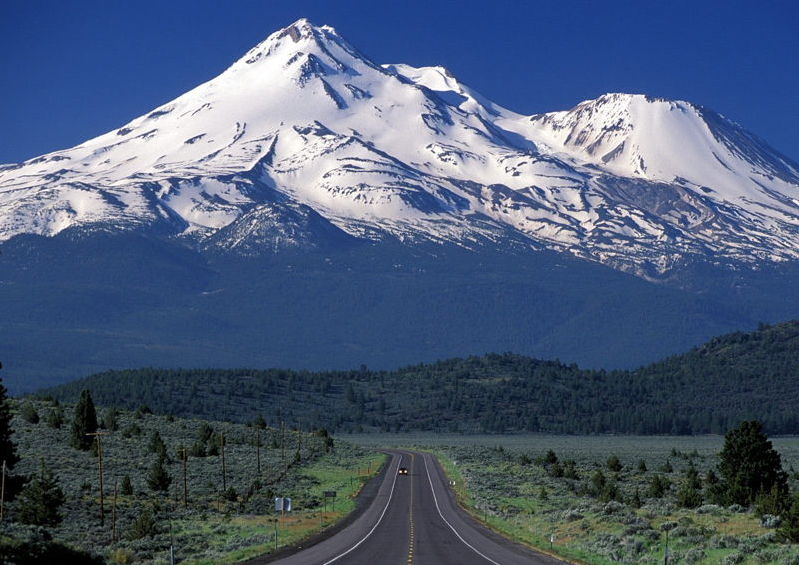
Shasta-Road

Whether you’re looking to find Bigfoot or find a cure for what ails ye, believe in flying saucers and the hollow earth theory, or just feel called to go spiritually journeying in a place where the “veil between this world/dimension and the next is thinner” there’s a destination in California that will fit the bill: a currently inactive volcano called Mt. Shasta. That it’s in California may not surprise some—Cali is the state of oddball seekers, after all—but the fact that the legends stretch back to the earliest settlers and further back into Indian lore may surprise some.

The New Agey stuff, of course, has been grafted onto the place wholesale, but Shasta has always been a place of legend. The mountain is sacred to many Indian tribes in the area: the Wintu, who believe they emerged from a sacred spring on the mountain; the Achumawi; the Atsugewi; the Modoc. The Shasta Indian tribe believe it to be the center of the universe and home to their creator god, Chareya, often called Old Man Above or Great Man in English. While he was creating the world, he made himself a gigantic tipi out of ice and snow. He lived there for thousands of years and the Indians knew he was in residence because they could see the smoke of his fire coming out of the tipi’s top. However, when white folks showed up in the area, Old Man Above decided it was time to go and the smoke wasn’t seen on the mountain after that.

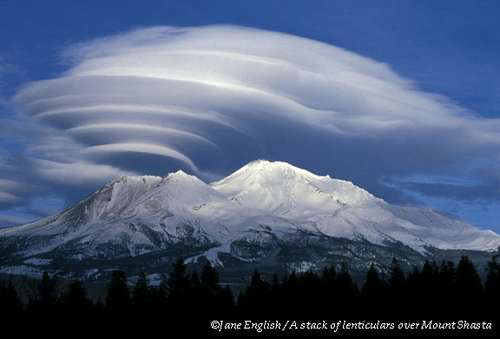
Perhaps that’s why there are people who to this day believe Shasta is hollow inside, a interdimensional passageway, the place where the last of the Lemurians live in a crystal city called Telos, home of the ascended masters, a covert UFO base, a…well, you get the picture. UFO sightings are quite frequent in the area, even without the lenticular clouds that frequent the mountaintop. And it’s said to be a Bigfoot hotspot, as a recent Finding Bigfoot episode claimed. Many spiritual seekers there report “telepathic communication” with Bigfoot when they pop in and out of the fifth dimension…and saucer occupants, and Lemurians, and…again, you get the picture.

shastacloudsovermountain

I do not laugh at the belief systems of others. I may not take them on as my own, but I figure that as long as they’re harmless and make these people happy, why not? And the beliefs clinging to the mountain are mostly that—peaceful and transcendental. Well, if you discount that one Guy who started a cult in the 1930s. His wife and son wound up swindling people out of a lot of money and getting busted by the Feds. The Guy himself did not go to prison—he was dead when the swindling occurred—so his name remains “pure” and the cult lives on in a Visitor’s Center in the town of Shasta.

But hey, Mt. Shasta is not to blame for the darkness at the heart of some humans, and most activity there is pretty positive. One might even come to believe that Mt. Shasta could purify even the darkest of hearts.

At his first sight of Mt. Shasta in 1874, John Muir is reported to have said, “I was fifty miles away, afoot, alone and weary, yet all of my blood turned to wine and I have not been weary since.”

And therein may lay the essence of the Mt. Shasta experience. More than anything, what fascinates people about the mountain is the gosh-awful grandeur of the place. It inspires awe, and so people pour that awe into a multiplicity of belief systems. The place may very well be a vortex to some otherworldly place, or it may just be a vortex of amazing beauty.

As Steven Jackson put it, writing for NPR, when he hiked there: “I don’t have a spiritual epiphany. But the air feels cold and sharp. The old-growth cedars are covered in brilliant green moss and shape-shifting clouds whip across the sky impossibly fast. In short, it is literally awesome. And regardless of what one believes about the mountain, it’s easy to see why it has so many legends to its name.”

Random quote of the day:

“Your daily life is your temple and your religion. When you enter into it take with you your all.”

—Kahlil Giban, The Prophet

 daily4WP@@@

Disclaimer: The views expressed in this random quote of the day do not necessarily reflect the views of the poster, her immediate family, Siegfried and Roy, Leonard Maltin, or the Mormon Tabernacle Choir. They do, however, sometimes reflect the views of the Cottingley Fairies.


Random quote of the day:

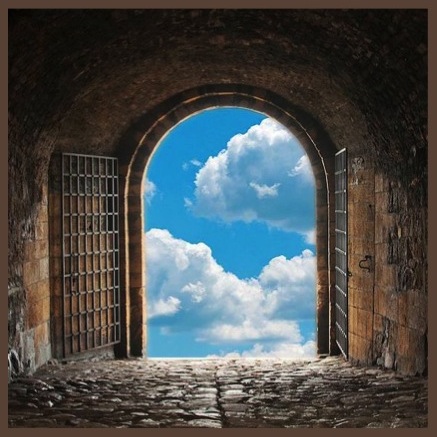
“So hard to accept that the prison door is open and we could walk out if we truly wanted.”

—Alain de Botton, Twitter, July 25, 2011

prison4WP@@@ 

Disclaimer: The views expressed in this random quote of the day do not necessarily reflect the views of the poster, her immediate family, Siegfried and Roy, Leonard Maltin, or the Mormon Tabernacle Choir. They do, however, sometimes reflect the views of the Cottingley Fairies.


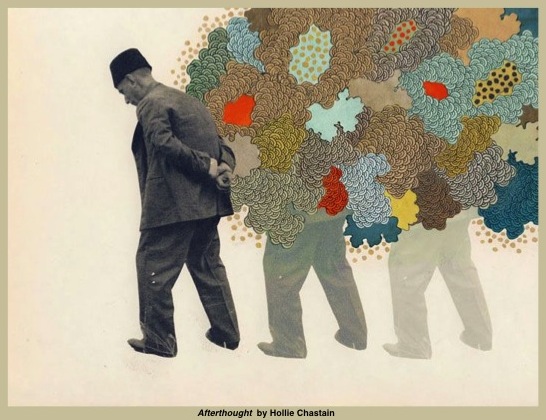
Random quote of the day:

“I love the flowers of afterthought.”

—Bernard Malamud, The Paris Review, Spring 1975, No. 61

 afterthought4WP@@@

Disclaimer: The views expressed in this random quote of the day do not necessarily reflect the views of the poster, her immediate family, Siegfried and Roy, Leonard Maltin, or the Mormon Tabernacle Choir. They do, however, sometimes reflect the views of the Cottingley Fairies.


http://folklorelei.livejournal.com/9128.html


Random quote of the day:

“You do not chop off a section of your imaginative substance and make a book specifically for children, for—if you are honest—you have no idea where childhood ends and maturity begins. It is all endless and all one.”

—P. L. Travers, quoted in Sticks and Stones by Jack Zipes

 childhood4WP@@@

Disclaimer: The views expressed in this random quote of the day do not necessarily reflect the views of the poster, her immediate family, Siegfried and Roy, Leonard Maltin, or the Mormon Tabernacle Choir. They do, however, sometimes reflect the views of the Cottingley Fairies.


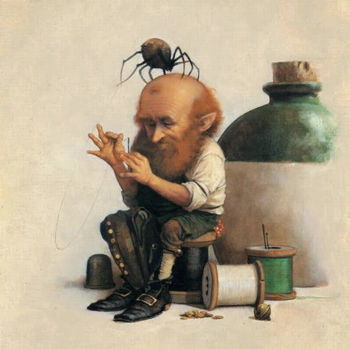
brownie-sm

Illustration by Jean-Baptiste Monge

There’s always one in every crowd. You know, you’ve got a good thing going and that one guy or gal pushes things too far and ruins it for everyone. This is no less true when dealing with fairies.

I was reading R. Macdonald Robertson’s Selected Highland Folktales and he told the story of “The Fairies of Pennygown.” If any of the townsfolk of Pennygown needed help with a task, they brought the work of an evening to a certain nearby sithean, a lovely green fairy hill. By morning, the task would be nicely completed: spinning, weaving, repair, mending, you name it. One villager, though, kept leaving more and more difficult things, pushing it.

One night he left by their hillock a piece of driftwood which he had picked up on the sea-shore, with instructions that it was to be made into a ship’s mast. When the villagers came next morning to collect the property left overnight, they found none of the tasks executed. This last request had angered the fairies so much that they had left their hillock, in disgust, for good.

Any reasonable being would be put out by such oafish behavior, it’s true. But it’s also true that helpful fairies are a tricky lot. They can have goodwill towards humans, but it can also turn on a dime. If they’re insulted, they can get mischievous and mean. Some say poltergeists are fairies who’ve become insulted by a householder and take it out in spite.

They also have sometimes exacting standards of what constitutes insult. Brownies and hobs, for instance, will gladly help out with the housework, usually at night like the Pennygown folk. However, they don’t want to be seen, and don’t want payment, or even expressions of gratitude. They will, though, accept gifts, mostly in the form of food, especially porridge and honey. If a householder starts taking them for granted, openly thanks them, or considers the food “payment”—or if they try to get a glimpse of them—the brownies will forthwith abandon the house, never to be seen again or lend their help.

There are other European versions of such beings: tomte in Scandanavia, domovoi in Slavic countries, Heinzelmännchen in Germany, Haltija in Finland, many others. Some have even made the trip over the Atlantic to the Americas. But in my (admittedly limited) investigation of helpful fairy folk, I’ve only found one non-European example of work-helpful fairies, the koro-pok-guru of the Ainu people of the Northern Japanese islands.

These beings would hunt and fish for the Ainu in exchange for little gifts, leaving the goods overnight. Like the brownies, they hated being seen. Of course, one Ainu loser couldn’t leave well enough alone and blew the gig for everyone. The young man in question waited by the place where the gifts were left, determined to see a koro-pok-guru, and laid hands on the first one to appear. It was a beautiful koro-pok-guru maiden, but she and her people were so angered at this affrontery that they disappeared, never to help the Ainu or be seen again.

Very strong parallels with the European myths, but that isn’t entirely surprising. Ainu are racially distinct from the Japanese. Recent research suggests Okhotsk origins and there is still a small population of Ainu in Russia. They share that pan-European ancestry, so they share those ancient pan-European stories.

But as I said, I haven’t found anything else like it around the world. Good and bad spirits aplenty, but none who will pitch in to do the work for humans in exchange for small gifts. I am far from an expert on this, so if anyone knows of such a tradition in a non-European context, I would love to hear about it.
Random quote of the day:

“In the past, men created witches: now they create mental patients.”

—Thomas Szasz, The Manufacture of Madness

 witches4WP@@@

Disclaimer: The views expressed in this random quote of the day do not necessarily reflect the views of the poster, her immediate family, Siegfried and Roy, Leonard Maltin, or the Mormon Tabernacle Choir. They do, however, sometimes reflect the views of the Cottingley Fairies.


« Previous PageNext Page »