Random quote of the day:

“It’s important to live life with the experience, and therefore the knowledge, of its mystery and your own mystery. This gives life a new radiance, a new harmony, a new splendor. Thinking in mythological terms helps to put you in accord with the inevitables of this vale of tears. You learn to recognize the positive values in what appear to be negative moments and aspects of your life. The big question is whether you are going to say a hearty yes to your adventure….the adventure of the hero—the adventure of being alive.”

—Joseph Campbell, interviewed by Bill Moyers, The Power of Myth

yes4WP@@@ 

Disclaimer: The views expressed in this random quote of the day do not necessarily reflect the views of the poster, her immediate family, Siegfried and Roy, Leonard Maltin, or the Mormon Tabernacle Choir. They do, however, sometimes reflect the views of the Cottingley Fairies.


Random quote of the day:

“The eye through which I see God is the same eye through which God sees me; my eye and God’s eye are one eye, one seeing, one knowing, one love.”

—Meister Eckhart, Sermon IV: True Hearing

 eye4WP@@@

Disclaimer: The views expressed in this random quote of the day do not necessarily reflect the views of the poster, her immediate family, Siegfried and Roy, Leonard Maltin, or the Mormon Tabernacle Choir. They do, however, sometimes reflect the views of the Cottingley Fairies.


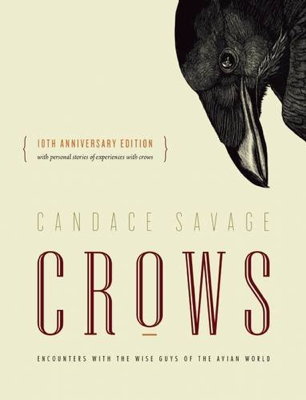
crows

I love crows. Yes, I know. Crows are a hard sell to many people, but I am unrepentant. I’m fascinated by their intelligence, their creativity, and that look of presence when their eyes meet yours. So I was eager to read this book.

It surprised me when it arrived: a thin volume, only 113 pages including the index, but unusually weighty because it’s lavishly illustrated (every other page) on high-quality, heavy paper and beautifully put together. It takes great advantage of the space between the covers, cramming in so much information that the weightiness of the book seemed as much from the information as the heavy paper. Using it, I was able to verify that, yes, that exceptionally large dominant crow hanging around my house was indeed a crow and not a raven; and I was able to pick out the adolescent packs and understand their behavior better. Also what some of those screaming matches were about.

Their intelligence and resourcefulness make it easy to understand why crows have become such an integral part of so many mythologies, so much folklore. Their association with the trickster mythology is so ancient that it is shared in both Australian Aboriginal mythology and Native American. Considering how long these populations must have been isolated from each other and from the rest of the world, that’s rather impressive. There are trickster associations in European mythology as well.

But they aren’t just viewed as tricksters and evil omens. In some Buddhist traditions, they are regarded as protectors of the Dharma—cosmic law and order, among other things. In Hinduism, they are considered to be embodiments of the recently deceased, and to be messengers and information-givers. This echoes the Norse idea of Huginn and Muninn, the ravens who constantly brought information to Odin. And in some American Indian tribes, crows are considered not only tricksters, but creators of the world.

Ms. Savage covers various mythologies concerning crows, the latest scientific research, as well as keen observations of crow behavior throughout the ages. I guarantee you’ll have a different appreciation of these wise guys once you’ve read this book. I thoroughly enjoyed it.

Did you know—?

Crows are the only non-primates who make tools. Other critters use what they find around them as the occasional tool, but crows will actually take what they find and reshape it to accomplish tasks. They have complex social organizations and their own languages (topping 64,000 different calls). They love, they hate, they grieve, they practice deceit as well as bravery, they reason, are tender and harsh. They hit all the standards we declare are solely-human characteristics. They’re not only as amazing as I always suspected—they’re more amazing.

An excerpt:

[Avian researcher Carolee Caffrey] was observing a nest through a spotting scope when the breeding pair returned to feed their nestlings, only to discover that their nest had been raided by a raptor in their absence. “In all my life, I’ve never heard such horrible, bloodcurdling screams as the crows made at that nest. The male flew away after a minute or two, but the female stayed behind and, for the next four hours (until Caffrey reluctantly left), tended a surviving but injured nestling by nuzzling it, picking up its neck, and preening the side of its head. All the while, the crow uttered mournful-sounding oohs.

Another, more lighthearted one:

Scientists wanted to test the reasoning ability of some captive crows so they devised a complex series of boxes, some of which had bait inside, many that were empty.

[The crow named] Hugin figured out the rule on the first morning of the trials…His companion Munin, by contrast, couldn’t even be bothered to look. Instead, as the dominant bird in a group, he preferred to bide his time until Hugin found the food; then he would muscle in and gobble up one or more of the tasty tidbits….Socially subordinate though he was, Hugin was no pushover. On the first afternoon of the experiment, he came up with a countermove. When Munin began to press in on him, Hugin would interrupt his foraging, fly over to one of the unrewarded clusters, and start opening empty boxes. He kept at it, opening and opening, until Munin came to join him; then, as soon as he saw his rival nosing around the wrong cluster, Hugin would dash back to the rewarded boxes and take advantage of his head start to grab a few extra morsels.


Random quote of the day:

“A peace which depends only upon fear is nothing but a suppressed war.”

—Henry Van Dyke, Ideals and Applications

 peace4WP@@@

Disclaimer: The views expressed in this random quote of the day do not necessarily reflect the views of the poster, her immediate family, Siegfried and Roy, Leonard Maltin, or the Mormon Tabernacle Choir. They do, however, sometimes reflect the views of the Cottingley Fairies.


Random quote of the day:

“A writer is someone for whom writing is more difficult than it is for other people.”

—Thomas Mann, Essays of Three Decades

 writer4WP@@@

Disclaimer: The views expressed in this random quote of the day do not necessarily reflect the views of the poster, her immediate family, Siegfried and Roy, Leonard Maltin, or the Mormon Tabernacle Choir. They do, however, sometimes reflect the views of the Cottingley Fairies.


Random quote of the day:

“We tend to keep going down the wrong track to spare ourselves the humiliation and fear of acknowledging all that wasted time.”

—Alain de Botton, Twitter, August 23, 2011

track4WP@@@ 

Disclaimer: The views expressed in this random quote of the day do not necessarily reflect the views of the poster, her immediate family, Siegfried and Roy, Leonard Maltin, or the Mormon Tabernacle Choir. They do, however, sometimes reflect the views of the Cottingley Fairies.


Random quote of the day:

“It’s said that ‘power corrupts,’ but actually it’s more true that power attracts the corruptible. The sane are usually attracted by other things than power.”

—David Brin, The Postman

 corrupt4WP@@@

Disclaimer: The views expressed in this random quote of the day do not necessarily reflect the views of the poster, her immediate family, Siegfried and Roy, Leonard Maltin, or the Mormon Tabernacle Choir. They do, however, sometimes reflect the views of the Cottingley Fairies.


Random quote of the day:

“An expert is a man who has made all the mistakes which can be made in a very narrow field.”

—Niels Bohr, quoted by Edward Teller in A Dictionary of Scientific Quotations by Alan L. Mackay

 expert4WP@@@

Disclaimer: The views expressed in this random quote of the day do not necessarily reflect the views of the poster, her immediate family, Siegfried and Roy, Leonard Maltin, or the Mormon Tabernacle Choir. They do, however, sometimes reflect the views of the Cottingley Fairies.


Random quote of the day:

“You write for the people in high school who ignored you. We all do.”

—Carolyn Kizer, quoted in The Courage to Write: How Writers Transcend Fear by Ralph Keyes

 writing4WP@@@

Disclaimer: The views expressed in this random quote of the day do not necessarily reflect the views of the poster, her immediate family, Siegfried and Roy, Leonard Maltin, or the Mormon Tabernacle Choir. They do, however, sometimes reflect the views of the Cottingley Fairies.


encounter

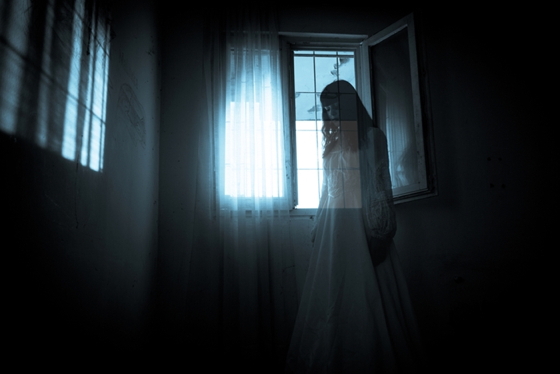
I have posted elsewhere about the sleep paralysis I experienced while living in an apartment in Venice, California. That was only one of the strange things that went on there, and my ex-roommates and I have often wondered what lay at the base of it all. One of our theories was that a ghost followed my friend, L., home from her mother’s house.

It all started when L’s grandmother Helen died. L’s parents, Jean and Vaughn, went back to Ohio to settle Helen’s estate. They spent a couple of weeks clearing out the house. The night before they returned home, they slept in Helen’s bed. Jean heard the closet door—which she’d firmly closed—squeak open. She said she’d never heard that door squeak before and it scared the hot holy hell out of her. She didn’t get out of bed to investigate because Vaughn was sound asleep and she didn’t want to disturb him, but she didn’t get much sleep after that, either.

As soon as it was daylight, she got out of bed and went to the closet. Looking inside, she noticed that part of the closet wall showed a gap that hadn’t been there before. When she peeked inside the crack, she saw it was a secret compartment with something inside. She pulled the compartment open and found some old letters and, more importantly, the picture of a little girl about ten or eleven. On the back of the picture was written “Velma” with birth and death dates. This girl turned out to be Vaughn’s older sister who had died at about the age shown in the photo and before Vaughn had been born. Helen was so distraught by her daughter’s passing that she wouldn’t let anyone talk about her and for years Vaughn hadn’t even known she’d existed. Jean and Vaughn were glad to find this picture. She said, “I guess Velma didn’t want to get left behind or Helen didn’t want us to forget her.”

So they took the picture back to California, framed it, and put it on a shelf in one of the bookcases they had in a small library alcove in their house. One day when Jean returned home and walked past the alcove, a bird was suddenly there, fluttering frantically about in panic. With great difficulty, Jean directed it across the room and out the sliding glass door. The alcove did have windows, but they weren’t open, and thin louvers even when they were, so it was a great mystery how the bird got in that out of the way alcove, of all places. Then one night they were sitting in the living room, about ten feet from the alcove, and Jean mentioned the bird incident. They heard an enormous thump on the floor and hurried into the library. A heavy book which had been shelved above Velma’s picture had somehow worked it’s way out of the bookcase and landed five or six feet away. The title of that book: The Myths and Superstitions of Great Britain.

There were other incidents regarding books in that alcove, but the coup de grace for L. was the day she visited her parents’ house to feed the cat. L. started thinking about Helen, and all of a sudden the room filled with the scent of Helen’s perfume. She fed the cat and got out the hell out of there real fast.

Eventually, Jean—who had felt closer to Helen than her own mother—got concerned that Helen (or maybe Velma) was earthbound. She hadn’t ever felt afraid of the presence in the house, but she didn’t want anyone to be stuck here. She said to the general cosmos inside her home, “I want you to know, Helen, that we’ll never forget you and we’ll never forget Velma. And it’s okay if you want to move on to wherever you need to go.” There really weren’t any more incidents after that.

But then L. started having weird things happen at her own apartment, and shortly after that we moved in together to yet another apartment. Weird things started happening there: keys or books or knick knacks went missing and wound up in odd places, strange noises and disembodied footsteps, a number of prankish things. We decided it might be Velma who had followed L. from place to place, for no other reason than that the things happening seemed childish in nature. I remember opening a cabinet door wide with the door flush against the wall. I dropped a plastic bottle on the floor, bent to pick it up, and when I raised up, the door had been moved to where my rising head smacked it hard. I yelled, “Velma! That really hurt! It’s not funny!” The pranks stopped after that.

But other, darker weirdness continued.

There was that sleep paralysis syndrome thing. It lasted through my tenancy in that apartment. I had one more incident within weeks after I moved—a farewell performance—and have never been troubled by it since, thank the gods.

None of us rested completely easy in that apartment. We all had troubled dreams and woke in terror. Heard things. Felt things. Saw things out the corners of our eyes and when first waking from sleep. Maybe there was something there.

Or maybe it was the power lines that ran directly over the roof of the apartment giving us EMF hallucinations. Maybe it was mold hidden in the walls poisoning the air we breathed and affecting our minds. Maybe it was psychic contagion—my roommates picking up on my nightmares and having their own—or an atmosphere of shared ghost stories seeping into the unconscious. All possible rational explanations.

But rational explanations are rarely as satisfying as the idea of Something There. That’s the thing about folklore and folktales. They satisfy some deep craving in human beings because they have a depth and resonance that science rarely achieves. After all, they come to us from the deep and dark archetypal chambers of the heart. All science has going for it is the sunlit mind of reason and sanity.
« Previous PageNext Page »