writing


Random quote of the day:

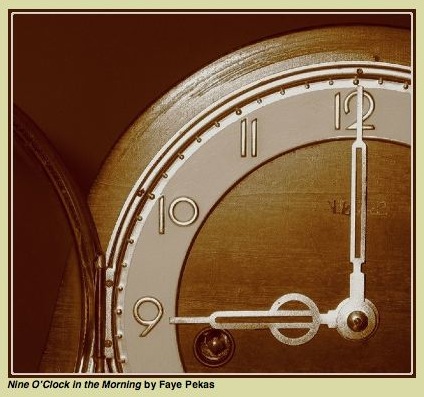
“I write when I’m inspired, and I see to it that I’m inspired at nine o’clock every morning.”

—Peter de Vries, interview, The Observer (London), 1980

Disclaimer:  The views expressed in this random quote of the day do not necessarily reflect the views of the poster, her immediate family, Siegfried and Roy, Leonard Maltin, or the Mormon Tabernacle Choir. They do, however, sometimes reflect the views of the Cottingley Fairies.

Of thinking my novel-in-revision sucks the suck monkey’s toes. I’ve been cutting and fixing, but I think there’s plenty of mess left over. I want to see if I can cut at least another 2k before throwing myself on the mercy of my betas.

No matter how promising a novel starts out, it always reaches this despair stage. But that’s probably a good thing. Otherwise, we might love them so much we never wanted to let them go.

And every novel must be let go—and not just in the sense of “If you love something, let it go. If it comes back to you, it’s yours. If not, track it down and kill it.” Oh wait, that’s not how that goes, is it?

Well, letting go means never having to say you’re sorry.

Wait. That’s not what I’m trying to say, either. What I’m trying to say is that letting go of a novel is about liberating yourself to work on the next thing. I am so ready to work on the next thing.

Here’s another writing question for you: does every genre story have to start in media res?

I think it may be a genre preference, and I do often enjoy stories that begin with a burst of speed, throwing the reader into the water and forcing them to swim or drown. Certainly, if you’re writing urban fantasy or paranormal romance or space opera or some such sub-genre, you’re probably going to want a quick immersion in plot.

But those aren’t the only kind of stories, and some of my favoritest stories in the world have not begun with a bang and a pop. They’ve built slowly, meandered through interesting character and setting introductions, created magic with language, every so many lovely loads of language, and eventually, yes eventually, wandered up to the plot and politely shaken hands before throwing it to the mat and beginning the wrestling match.

I’m not sure those kinds of stories are in fashion anymore. But I would be interested to know what you think on the subject. This is another of those personal preference things, and there is no wrong or right answer, I don’t think. There is just what is, and what you think, and what the market will bear.

Or what the reader will bear.

Writing is a solitary occupation, but the truth is, we need other people if we’re going to grow as artists. We need readers, yes, but before we get readers we need first readers. Beta readers help give perspective on our work, tell us when we’ve gone astray, or when we’re being self-indulgent. But it’s a tricky thing finding them. I find it incredibly difficult to ask people to read my stuff. Makes me all squirmy inside, and acting all squirrely on the outside. Not a pretty picture.

That’s one advantage of belonging to a writing group, whether in person or online. Everyone knows what they are there for—or should. If it’s an online group, you slap it up on the site and wait until someone decides to take a look, and you get out there and start doing critiques yourself to build momentum. If nobody does take a look, it’s a pretty lonely feeling, throwing you right back on the solitary occupation thing. There’s no easy answer for that except to keep trying. Maybe you’ll get lucky and build relationships that will allow you to swap whole novels rather than parts thereof.

Swapping whole novels, though, is hard. Not just because it’s asking someone for a much larger commitment of time, but because it’s not just a question of finding anyone, anywhere who will read your stuff. These kinds of relationships are, or should be, built slowly over time. It’s an issue of extreme trust, handing over your work to someone else. Of finding people you jibe with, who are on the same page, so to speak. If you’re not both looking at critiques in the same way—for instance, wanting the full editorial treatment vs. a light overview—it can cause serious ruptures and a lot of pain. Establish that upfront, that’s my advice (for what it’s worth). Make sure you want what you say you want, and make sure you’re willing to take in the criticism and consider it rather than having a knee-jerk reaction.

“They’re all fools! They don’t understand my subtle genius!”

You’re allowed to have the knee-jerk reaction, everyone does, but you’re not allowed to act on it. You’re not allowed to actually speak out loud that first burst of emotional entrenchment when someone has nailed a problem with your manuscript. The ones that hurt the most are often the ones you suspected were wrong all along but hoped no one would notice. Since somebody did notice, it’s time to suck it up and make the changes, not spout off. Spouting is unprofessional, and even if you aren’t yet a pro, taking fair and honest criticism with the gratitude it deserves is a vital skill to cultivate if you want to improve your work. Fair and honest criticism is a gift from the gods and should never, ever be taken for granted.

These relationships also change over time as one-time partners drift away to other interests, divergent paths, changes in life circumstances. Even writing groups lose their efficacy over time as everyone gets so familiar with each others’ work that it’s hard to view with fresh eyes. The pot needs to be constantly replenished or it boils down to a sticky sludge. Finding those blessed first readers is a never-ending process. But it’s wonderful when it works. It’s a blessing when it works.

So, what is the difference for you between lush prose and overwritten prose?

I’m not asking to be a smart aleck or because I have an ax to grind (I don’t), I’m genuinely curious what the breaking point is for any of you who would care to comment.

I know that one person’s lush is another’s overwritten and vice versa, so some of it is a matter of taste, but I’d still like to hear your thoughts on this if you’re willing.

For myself, yeah, I do sometimes hit a wall with some lush prose where I want very badly for the author to tone it down several notches. Usually for me it involves the use of a lot of two dollar words when simpler ones would flow better, but it can also involve a great deal of artery-clogging images piled one on top of another. Still, other people lap that kind of thing up like cream—arteries be damned.

There probably isn’t a consensus. But, please, discuss…

Ever since the Syfy Channel’s new series, Haven, debuted I’ve been in a slight funk. You see, the novel I’m doing revisions on is a contemporary fantasy which involves people in a quirky rural Southern California county where the paranormal is an everyday occurrence and the inhabitants take it for granted. Much like the quirky small town of Haven on Syfy. It was bad enough when their show, Eureka, premiered. That was about a quirky small town in which wild experiments in fringe science took place, causing paranormal-like events to happen all the time. Everyone there pretty much took it for granted, too.

I think the story of my novel is original, but it can’t help but be overshadowed by all this quirk and all these strange towns. I continue to polish the novel, however. It’s what I have; I will market it. It’s a stand-alone, but it’s also part of a trilogy, see, and I really want to write those other books. Maybe even more than I wanted to write this one.

I first came up with the concept of Dos Lunas County, my quirky entry, about eleven years ago. Formulating the concept, the characters, the plotting took awhile, and this novel had at least two false starts before I finally finished it. This is not an atypical pattern for me, unfortunately. For a time I was finishing a novel a year, but those individual novels were often years in the making. One would come on strong, then need restructuring so I’d work on another until I solved the problems. About once a year, one of them would finally click completely into place and I could push forward to the finish. This has, as you can imagine, sometimes worked to my disadvantage, marketing-wise.

If only I weren’t such a slow writer. If only I didn’t think so much. If only I didn’t think up perpetual if-onlys. This isn’t a whine, not really, because I know that the fault, dear Brutus, lies not in my stars but in myself. I could get back to the novel a year pace, I think, but I seriously doubt I will be able to conceive, plot, and write a novel in a year. They surge and wane and surge again, so I’m always a beat or two behind the rhythm of the market.

I write on and continue to market my arhythmic novels. What else can I do? I am what I am, the market is what it is, and the zeitgeist is always pumping out ideas in multiple directions, hoping that somebody will take up the challenge and run (fast) with it.

Being a character-based writer means that generally plots tend to accumulate around who my protagonists are rather than the other way around. So I usually have the illusion of knowing a great deal about my people before I officially commit them to the page—officially being when I actually type “Chapter 1” at the top of the file. Every once in awhile I get a surprise.

That seems to have happened with chapter one of the new novel, Time in a Bottle. (Really dislike that name, really need to think of another.) As soon as the protagonist, Molly, spilled onto the page, she came across much perkier than I’d originally envisioned her. Younger. More a creature of sunshine than I would have made her out to be. I resisted this pull, even typing a note to myself at the top of chapter one: “Age her up, serious her down.” But she refused my admonition. She persisted in being who she was.

I’ve long since learned that when a character pulls that hard in a certain direction, I really need to shut up and follow. I’m just along for the ride, after all, and most times they really do know best. If I analyze this in that light, I see that the story which is going to unfold might actually work better with this personality. She’s going to be dealing with the shadow world of the subconscious, helping to dispel some of those shadows, so it really doesn’t make sense that she’s as serious as I tried to make her. She’s going to need that sunshine to get through this, to even buy into this mess in the first place. She’s something of a rescuer, after all.

Of course, sometimes I’ve been fooled in this regard, too. Sometimes a character pulls me off in an unexpected direction and it turns out to be a dead end. Generally, this means I haven’t gotten to know them as well as I thought I had before starting out on the journey and they turned out to be tricksters, having their teasing way with me. This can be painful and require much rewriting.

But hey, writing is rewriting, right? There’s always going to be a lot of that in my future.

Random quote of the day:

“Altogether, the style of a writer is a faithful representative of his mind; therefore, if any man wishes to write a clear style, let him be first clear in his thoughts; and, if any should write in a noble style, let him first possess a noble soul, and live a noble life.”

—Johann Wolfgang von Goethe, quoted in Conversations of Goethe with Johann Peter Eckermann, entry for April 14, 1824

Disclaimer:  The views expressed in this random quote of the day do not necessarily reflect the views of the poster, her immediate family, Siegfried and Roy, Leonard Maltin, or the Mormon Tabernacle Choir. They do, however, sometimes reflect the views of the Cottingley Fairies.

ETA: This is a scam by a crooked “How to get published” con artist. You can read about it here: http://nielsenhayden.com/makinglight/archives/012502.html

And I suppose it all depends on what parts of your ms. you choose as a sample. But here are my results: an unnatural mating of Stephen King and James Joyce.

A randomly chosen internalization piece from one of the characters:

SCAM MEME MESSAGE TELLING ME I WROTE LIKE STEPHEN KING.

A randomly chosen piece of description:

SCAM MEME MESSAGE TELLING ME I WROTE LIKE JAMES JOYCE.

A randomly chosen dialogue run:

SCAM MEME MESSAGE TELLING ME I WROTE LIKE STEPHEN KING.

I hope to return to real blogging soon, but it’s been hella busy. In the meantime, here’s another one of those numbered thingies:

1. Listening to the graduate students around here make excuses to their professors as to why they haven’t completed their coursework, it strikes me that not much has changed since elementary school. They’ve just found more sophisticated, elaborate, and convoluted ways of saying, “The dog ate my homework.”

2. I’m on chapter eleven of the read-through of Venus in Transit. I should be much further along as I hadn’t intended to do any restructuring or heavy editing, but you know how it goes. A couple (or more) scenes that just had to be rewritten, language desperately needed de-clunkifying, things had to be looked up and pondered… There’s still plenty more that needs fixing, no worries, but it’s amazing to me how many of the smaller threads of plot and characterization got left untied. I’ll definitely deal with those in the next draft.

3. I’ve acquired a sudden re-fascination with cunning folk, witchery, and folk medicine, et al. lately. I’ve been reading books and scouring JSTOR for articles. (I love JSTOR. Thank goodness for institutional subscriptions.) If research interest is an indicator of which novel my right brain next wants to write, things are looking good for my proto-novel, Time in a Bottle, the idea based in part on my novella, “Sealed with a Curse.” That novella involved an 18th century cunning man, infidelity, wastrelism, and a witch’s bottle. The novel version carries forward to the 21st century descendants of some of the folks involved in that affair. And maybe time travel. Or maybe not.

4. I’m wondering if a subscription to Netflix would be worth it to me since I rarely am in the mood to watch a movie at home more than once or twice a month? I used to devour movies at a massive rate, but I lost the love somewhere along the way. The $8.99 one would definitely be sufficient, but I’m not sure I’d get my money’s worth even then.

5. Come the Singularity, I suspect I will not be allowed on the lifeboat. I suspect I will be okay with that. Utopian visions rarely turn out well for humanity at large. I have zero confidence that techo-utopians will be any better at it than every other millennial movement that has wrecked humanity in the past. I am not a Luddite. I really do enjoy living in the bright, shiny techno-age—but sweeping mass social engineering never works. That’s the lesson of history. That’s the lesson of any close study of human nature. Power corrupts, even utopian techno power—and besides, these yahoos aren’t even trying to be egalitarian. This is all about ego and rich mostly whitefolk trying to escape the filthy masses.

« Previous PageNext Page »