writing


To actually participate in this poll, you can go to my Livejournal blog.

Are writers always selling somebody out, telling the family secrets and passing it off as fiction, portraying someone they’ve known as a jerk to get revenge, or otherwise Spilling the Beans?

Inquiring minds want to know.

Spilling the beans.
Open to: All, detailed results viewable to: All

Are writers always selling somebody out?

● I think that’s more true of literary fiction than genre fiction.
● Sure. Writers always have hidden agendas. They just tell people it’s all made up.
● No. It’s all just fiction, part of the creative process.
● Too much personal history in fiction is so transparent no one will buy it/want to read it.
● Unless you make it really salacious and it’s well-written.
● Or just really salacious sometimes.
● Sometimes it’s disguised personal business, sometimes it’s all made up.
● Good fiction always has a grain of truth in it so people can relate to it.
● But the art in fiction comes in making it universal rather than deeply personal.
● Whether it’s personal or not most readers assume it’s personal.
● Ticky never did mind about the little things.
● Other.

“You will produce things of beauty, hold them up and open your hands, letting the wind carry them where she will.”

I don’t know about the beauty part, but I am considering the other part.  How did the stars know???

Jo Graham has written a beautiful encapsulation of what it takes (and what it means) to want to be a professional writer, above and beyond everything else you may hear about it.

Random quote of the day:

“Kafka had this word over his desk: WARTEN (WAIT).  Every writer must learn to do that while the unconscious works and underground forces prevail.  Maybe countries have to do that too.”

—Erica Jong, “Tears and Fears,” The Huffington Post, January 9, 2008

Disclaimer:  The views expressed in this random quote of the day do not necessarily reflect the views of the poster, her immediate family, Siegfried and Roy, Leonard Maltin, or the Mormon Tabernacle Choir. They do, however, sometimes reflect the views of the Cottingley Fairies.

Some of you who have known me for a long time, and read my stuff for a long time, may remember Hortensia Bustamante. She’s the strong-willed sister of the Bustamante Brothers of Dos Lunas County, the first white settlers to invade the Kintache Indian homeland.

Ever since I finished Venus in Transit, my Dos Lunas County novel, strong-willed Hortensia has been bugging me. “Where my novel?” she’s been asking.

I’ve explained patiently that I’m working on other things now, to make a change from Dos Lunas, but Hortensia has never been one to listen to the reasoning of her writer when she’s made up her mind about something. “Where’s my novel?” she repeats at every chance.

I staved off her insistence some time back by writing a 30k plus novella, but—although she liked it quite well—she’s informed me that it isn’t sufficient. Her story deserves expanding and exploring. I have been thinking along those same lines myself for some time and even had several ideas on how to do that, but I hadn’t thought of taking on that challenge at this juncture.

“It’s time,” Hortensia insists.

I find myself sighing fatalistically a lot these days. My imagination ping ponged all last week between chapter two of the Carmina novel and a short story, and I’ve been considering that maybe it’s time to start the rewrite on Venus in Transit. All the while Hortensia kept crooning in my ear: “It’s time. Where’s my novel? It’s time.”

I pulled the novella out today just to, yanno, look at it. Hortensia squee’d with glee. I told her not to get her hopes up. She scoffed.

So I don’t know what I’m working on now. Perhaps Hortensia would be the antidote to my restless. I’m sure Venus would be. Maybe I’ll let Venus and Hortensia and Carmina and Sea Eyes from the short story fight it out amongst themselves. Just let me know when you’ve figured it out, gang. Only, don’t start sending me tweets advocating for yourselves. That would be one step too far over the line.

Random quote of the day:

“And by the way, everything in life is writable about if you have the outgoing guts to do it, and the imagination to improvise.  The worst enemy to creativity is self-doubt.”

—Sylvia Plath, The Unabridged Journals of Sylvia Plath, 1950-1962

Disclaimer:  The views expressed in this random quote of the day do not necessarily reflect the views of the poster, her immediate family, Siegfried and Roy, Leonard Maltin, or the Mormon Tabernacle Choir. They do, however, sometimes reflect the views of the Cottingley Fairies.

There’s a lot going on in my life right now that’s consuming my energy. The phrase I say most often to myself, and not just in the context of blogging, is “You don’t have time for that.” I’ve managed to carve out niches for writing sessions and some critiquing (because the critiquing is important to the writing, too), but so many other things seem to elude me. Sometimes on the weekends I just collapse in a heap. My body demands it. This has been one of those weekends.

If things would just calm down at work…if things would just settle down in life…Ifs and might have beens.

I’ve also tried to carve out moments for myself when I don’t have to do anything, when I can sit and listen to the silence, or the song of the universe, where I can just exist. When life is pressing, it’s difficult to push that imminent sense of Things To Do away, but it’s necessary, even if only for fifteen minute chunks at a time. It all adds to the well of replenishment.

I accomplished this yesterday evening sitting in the garden for about twenty minutes reading, Big Sur and the Oranges of Hieronymus Bosch by Henry Miller. It’s his 1957 portrait of Big Sur, California, where he lived for fifteen years, and it sounded like a wild and marvelous place back then, both by its unspoiled nature, and in attracting a hardy breed of artists and dreamers. I found myself longing to go there—but that place he wrote about doesn’t exist anymore, not really. There’s still a great deal of impressive nature in the California central coast and it’s not nearly as populated as some parts of the state, but I can’t help thinking he’d shudder to see what it is now. Although maybe not. He predicted as much in the book, that it would be “discovered” and irrevocably changed. He thought they would be lucky to make it to the next millennium (2000) and keep it as wild as it was, and he was right.

So as I’m sitting there, longing for a place that doesn’t exist, feeling a little sorry for myself, I read this passage which really resonated:

In addition to all the other problems he has to cope with, the artist has to wage a perpetual struggle to fight free. I mean, find a way out of the senseless grind which daily threatens to annihilate all incentive. Even more than other mortals, he has need of harmonious surroundings. As writer or painter, he can do his work most anywhere. The rub is that wherever living is cheap, wherever nature is inviting, it is almost impossible to find the means of acquiring the bare modicum which is needed to keep body and soul together. A man with talent has to make his living on the side or do his creative work on the side. A difficult choice!

Now, I’m not much of a subscriber to the Artist as Special Creature Ordained by the Cosmos, but it was very much in vogue in the 1940s and 1950s, so Miller is writing inside his own time here. Rereading these passages today when I’m feeling a little less exhausted, they seem a bit over the top. And yet…and yet…when I think of all the artists I know—writers, painters, designers, whatever—this is the single biggest problem for most of them: how to make a living, how to spend one’s time, how to focus one’s life, trying to keep themselves together financially while they pursue that one thing that makes them feel most alive. Almost all of us work at some job to keep ourselves together, squeezing in time for creative work. Very few of us have the luxury of either existing in decorative impoverishment or living off our art. And yes, decorative impoverishment, the whole artist in a garret thing, is definitely a luxury. Anyone with a modicum of responsibility in life can’t afford to do that. Most of us have to slog away at it as best we can. There’s no nobility in it, it’s just doing what you have to do to keep body and soul together. For most of my life I, and almost every artist I know, has accepted that reality and gotten on with it.

It’s just at times like this, when I’m tired, when my art seems to be going through one of its periodic and chaotic phases of “redefinition,” when Real Life crowds, that it gets to me. The Artists’ Life may not be an Ordainment, but it is a calling, and for those of us stuck with it, it’s something of an imperative. It is that Thing That Must Be Done, regardless of what else is going on in life, because to not do it is to betray something fundamental in ourselves. To not do it is courting an impoverishment of the soul, the ashes of dreams which eventually choke off the life force altogether.

So. Fifteen minutes for myself here and there, a inviolable carved out chunk of time to do art, are not selfish things. They are necessary things, even if the world doesn’t always recognize that. Henry Miller was right about that, too, even if he did get a little carried away about the whole Artist as Noble Creature bit.
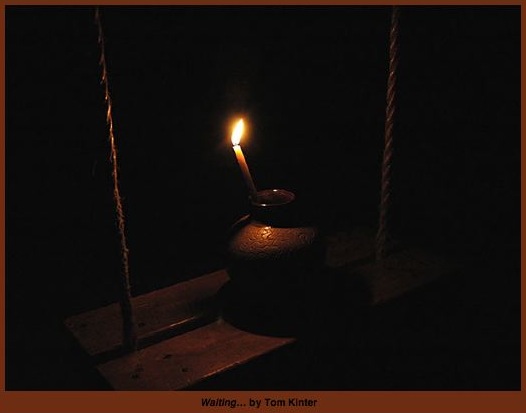
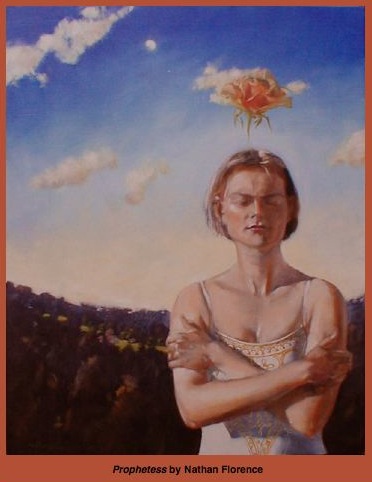
I used to do a lot more pondering than I do now.  Not the fretting, worrisome kind of things that too easily occupy the waking human mind, but the big questions.  The who-what-where-when and why of existence.  Pondering is important to who I am as a person.  It was something that made me feel connected to a deeper strata of the universe, so I made sure I had time to just think about things.  Some relatives may have called this “laziness,” but I called it “creative dreaming.”

Anymore—what with work and taking on a greater responsibility for helping my elderly mother—it seems as if there are always things to do, places I have to be, tasks, tasks, tasks that interfere with those golden ponder hours.  I have to carve out special chunks of time to get any pondering in, kind of like those chunks of time for writing.  Often the two are in conflict and I have to forgo one to do the other.  And when I do get a moment to sit and think about things, it’s jangled, broken up, a vibration dance inside myself that has trouble being still, constantly interjected with thoughts of things that need doing and guilt for not doing them.

Some of this, I realize, could be from media over-stimulation, but it’s also part of not being a kid anymore and the distractions inherent in moving into a different phase of life.  I feel guilty even mentioning it, really, partly from those old voices whispering “laziness,” and partly because there are far worse problems.  My elderly parent is not an invalid.  She’s still up and doing for which I am extremely grateful.  I do still have chunks of time to myself, even if jangled.  I should be grateful for what I have.

But “shoulds” are not golden; they buy very little besides guilt.  Certainly, shoulds do not build empires.  And the razor’s edge of all this, the thing that cuts the most, is that writers require pondering time.  I know for a fact that the less time I have for pondering and dreaming waking dreams, the more my writing suffers.  If I am struggling as a writer, it is partially due to that.  So pondering is not just a luxury.

I long sometimes for the serenity of an afternoon reading a profound book, one that makes my mind spark fire and sends the pondering engines into overdrive.  I  long for evenings in front of the fireplace, no one talking except the flames, mesmerized by their flicker and not-quite-understandable whispers, journeying through mental byways to that place where all flames originate, where fire has lips and tongues that speak plainly about The Secrets—if only you could recall them when your reverie is done.

Reverie.  What a beautiful word.

I’d love to ponder this some more, but I have to go.  My timer just went off and that laundry won’t do itself.

And so I’m off again on what appears to be yet another novel. I got close to 14k on the other one, Sympathetic Magic, before I realized it just wasn’t coming together. Inside me, mostly. I wasn’t seeing and feeling it like I should and it stopped going.

So I’m letting it rest now and I’ve got this other thing that’s been obsessing me. Since I have no deadlines, as a wise friend pointed out, I might as well take advantage of that luxury to work on something that’s really speaking to me. I hope this one takes.

This character, Carmilla, will be a challenge to bring off. She isn’t particularly sympathetic, although I hope she finds redemption by the end of things. She’s holding her cards close to the vest, though, and not showing me. She’d better give me a glimpse soon. I think she just wants to play with me for a while longer. She does have a cruel streak.

Here’s the opening—still very rough and new.

(more…)

The upbeat (for me) tone of the current WIP has not been matching my mood or life circumstances lately, so I find myself wanting to write something darker.  I also thought perhaps I should work on something with series or trilogy potential since I understand that standalone novels might be a tough sell these days.  I don’t think I should (and don’t want) to write to the market, but  the circumstances of mood/market might be an excuse to work on something my subconscious has been leaning towards for weeks now—maybe much longer.

My second novel, Blood Geek, was set in a traveling carnival in 1938 and although the novel itself was flawed and I trunked it long ago, I’ve always thought there was quite a bit of life left in the setting I created for it.  I could see a number of potential stories revolving around minor characters in that carnival.  Apparently, my hindbrain thought so, too, because I have been assiduously collecting historical data and pictures from the 1930s and early 1940s. It’s been an almost unconscious process.  I see myself stashing this information in folders and occasionally ask, “What do you propose to do with this stuff?”  To which my backbrain answers coyly, “You know perfectly well.”

I suspect I do.  I’m not sure it’s the place where I should be putting my energy now, but I reckon I have little choice or control about some things in my life or in the market. I’ve got to write what I can when I can, and push through to the finish of something—which takes a lot of commitment and a certain kind of obsession.  If I am not properly obsessed with an idea or a piece of work chances are it will be an interminable struggle with little pay off.  Without the obsession, it may not be the right time for that work.  Perhaps it will never have a time, or maybe it will take the vast, subterranean journey through the aquifer that my carnival idea has taken and come bubbling up again years hence, fresh and full of life.  Done with waiting, it declares its time is now, that I must set all else aside because it is finally ready.

But the question is, am I?

« Previous PageNext Page »