writing


Generally when I write a character, even in third person because I’m usually writing in a tight third person perspective, I like to use language that is appropriate to that person’s worldview and experience. My voice shifts slightly depending on who I am following. A thug will not describe the dewy light of dawn, and a lady of refinement will not curse like a sailor—unless the thug is not a typical thug but one who likes purple prose, and the lady once made her living swabbing decks. I’m not always sure all readers notice these things, but it’s important to me that I get that sort of thing right.

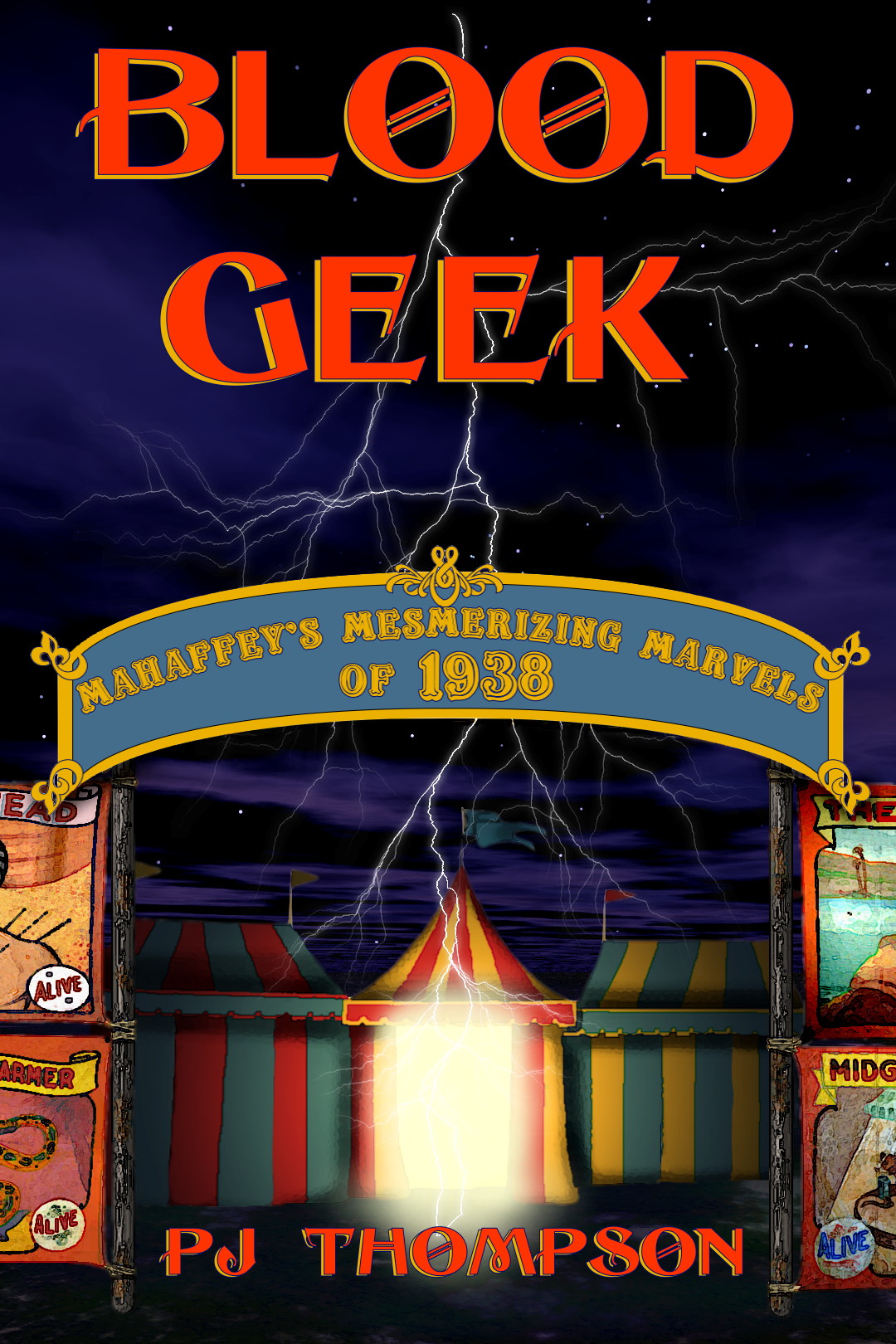
Time appropriate language is important, too. Revising a novel set in 1938 has reminded me how hard I worked to get the period language right. In some cases, this made the prose rather stiff in places, jarring to an early 21st century ear. In this final language polish, I’m trying to walk the line between authenticity and flow. “Twaddle” and “claptrap” may be perfectly acceptable 1930s period substitutes for “nonsense,” for instance—but they make me want to giggle. If the scene is not one in which I wish to evoke giggles, then I have to come up with a compromise that suits the scene, suits the period, and suits a more contemporary audience. In this case, I used “baloney,” which can be somewhat humorous, but isn’t quite as silly. It fits the context of the scene better, anyway, and that’s the important thing.

Then there comes the question of other types of verisimilitude which are not so easy to reconcile. I would have a great deal of trouble using racial epithets in my fiction. And yet in earlier periods of U.S. history those words were used regularly and casually. It was almost de rigueur in certain circles. Can I accurately portray those segments of society without using that offensive language? The words are so hurtful—but they were the way people spoke. I didn’t support removing “offensive” language from Huckleberry Finn, but can I justify using it in a contemporary work, even if it is set in an historical period?

I don’t have an answer, and fortunately in the case of my current novel, it didn’t come up. I know I’m not the only writer struggling with this, and I don’t think there are facile answers to the question. Character speak is always a balancing act between the way things are/were and the effectiveness of the prose in trying to tell a story. I suspect this is one of those cases where everyone has to decide for themselves what’s appropriate.
Random quote of the day:

“Those who toll the bell to announce the end of the novel should be asked to reflect on that verse by the poet John Donne: Aren’t they tolling the bell on their own ability to write novels?”

—Javier Reverte

(Thanks to mount_oregano for this quote.)

Disclaimer: The views expressed in this random quote of the day do not necessarily reflect the views of the poster, her immediate family, Siegfried and Roy, Leonard Maltin, or the Mormon Tabernacle Choir. They do, however, sometimes reflect the views of the Cottingley Fairies.

Not the WIP.  I think I fixed that.  Only time will tell.

No, it’s one of my short stories that’s broken in the middle.  And I don’t know how to fix it.  I’ve rewritten it ever so many times and every time I think, “Okay, I think that’s got it.”  I let it go, send it out into the world again to garner more rejections.  Then after many months (sometimes many, many months) I read it again and I think, “Dang.  It’s still broken in the middle.”

The beginning is good, the ending is good, I’m very fond of this story, but I know in my heart of hearts why it keeps garnering rejections.  There’s a clear drop off point in the middle where the opening momentum collapses and the oomph doesn’t pick up again until the closing pages.

But I don’t know how to fix it.  And it makes me very sad.

I seem to always have trouble with middles.  I can grab with openings, I can satisfy with endings (if anyone reads past the middle to find out about the endings), but middles slay me every time.  Sometimes I can figure out how to make them work, and sometimes I can’t.

Dang.

Random quote of the day:


“Writing is rewriting.  A writer must learn to deepen characters, trim writing, intensify scenes.  To fall in love with the first draft to the point where one cannot change it is to greatly enhance the prospects of never publishing.”

—Richard North Patterson


(Widely quoted, widely unsourced.)


Disclaimer:  The views expressed in this random quote of the day do not necessarily reflect the views of the poster, her immediate family, Siegfried and Roy, Leonard Maltin, or the Mormon Tabernacle Choir. They do, however, sometimes reflect the views of the Cottingley Fairies.

I spent a lot of time on the phone yesterday with the Verizon Wireless helpline. The computer had a hard time processing the idea that 1) I was ordering a phone for my mother but 2) I wanted the bill sent to me and 3) I didn’t want the new number to replace my current number. She was a nice lady and during downtime while computer got on with things, we chatted. I found out she was a painter in her real life, she that I was a writer. She encouraged me to not worry about selling my novels to traditional publishers. Did I know that I could publish them myself as ebooks?

Yes, thank you, I said. I was investigating that possibility quite thoroughly, not to worry. We concluded our business (successfully) and parted friends. Of a completely temporary nature.

The thing is, I am considering doing my own ebook. The proponents of indie publishing make some good points. The opponents of indie publishing and those who favor traditional publishing (who are not necessarily the same people) also make some good points. It’s a long, hard slog to do it yourself. It can be expensive and a great drain on one’s writing time. I would much rather go with traditional publishing, frankly, and I am still pursuing that for my more recent work. But I have some older stuff that isn’t bad, that I still take pride in, and I’d like to get it out there. I haven’t fully committed to the idea of publishing my own ebook, but I am starting to slowly roll towards that cliff edge.

Don’t get me wrong: I have absolutely no expectation of making money this way. Money is not at all why I’m considering this. I am not looking at the success of Amanda Hocking and Stephanie McAfee and thinking, “Wow! That could be me!” I haven’t got a name or a pre-sold “brand,” I don’t have the time to do the kind of gonzo marketing ebooks require—not with a full-time job and being a part-time caretaker. I am not a poster girl for possible ebook success. I think I understand the cold, hard facts of that.

But I would like one or two of these older novels to be out there. I’d like at least a shot of finding some kind of audience for them, however miniscule. They deserve their shot while I’m actively pursuing my shot at traditional things with the other books.

I am willing to be talked into or out of this. Don’t assume I’m stupid or haven’t read excessively and obsessively about all the pros and cons of indie publishing, but I am completely open to discussion on this. I welcome input and would like to hear what people think.

Cover design by F-Bod Studios.

marshallpayne1 wrote (about writing):

What do you consider your greatest strength as a writer. Your biggest weakness that you try to overcome? (Listing more than one strength or weakness is cool.)

Feel free to post this question on your blog and link to it in your answer here in the comments. I’ll go first in the comments.

Ahem. My greatest strength, I think, is characterization. I immerse myself totally in my characters, know them backwards, forwards, sideways, upside down, right side up, and crammed into small trunks. Um, so to speak.

Therein also lies one of my greatest weaknesses. Because I know them so well and have developed gobs and tons of gobs and more gobs about their backstory I seem compelled to put in all on the page in my zero drafts. I do weed through this nonsense in the first drafts and get rid of much of it (though my betas can scarce believe that), but I’m often left with a panicked sense of “What if I leave out something important??” Often my poor suffering betas have to kick me hard and tell me to cut some more. I can and do cut quite a lot by the final draft, but it’s often painful.

Therein lies another fault: a tendency not to trust the reader enough to get the characters and subtext and stuff without putting gobs of tons on the page.

I think my sense of humor translates onto the page pretty well, but it isn’t to everyone’s taste. I trust the reader enough to determine that for him or herself. I also trust them to be intelligent and perception people. I don’t write down to them.

I think I have fairly original ideas, except for the ones that have been done to death. I always try to find an oblique angle for the familiar, but that doesn’t often pay off in synopses where you have to reduce ideas ad absurdum.

Did I mention I was not good at reducing things, ad absurdum or just in general?

I do a decent job with the image making, I think.

Except for those times when the scenery takes over the story.

I could go on making lists, as I am an obsessive list maker and an obsessive self-critic, but then I’d be getting into trouble about reducing things again. I’d rather not go there yet again. This post is already, I’m afraid, proof of a sorry theme in my life. as I am an obsessive list maker and an obsessive self-critic, but then I’d be getting into trouble about reducing things again. I’d rather not go there yet again.

Random quote of the day:


“It’s none of their business that you have to learn how to write.  Let them think you were born that way.”

—Ernest Hemingway, quoted in With Hemingway by Arnold Samuelson


Disclaimer:  The views expressed in this random quote of the day do not necessarily reflect the views of the poster, her immediate family, Siegfried and Roy, Leonard Maltin, or the Mormon Tabernacle Choir. They do, however, sometimes reflect the views of the Cottingley Fairies.

The WIP in rewrites was at first losing words at a good rate, and I was pleased about that. Getting rid of excess, making things clean. I actually like rewrites, perverse creature that I am. Structural problems, however, made it necessary for me to add new material and so I’ve written three new scenes and I will be adding more. Deleting and rearranging more, too, but the word count is currently larger than when I started. Not as large as the first bloated draft, but growing. I am not too worried about this. I have to get the structure, story, and character stuff right first, then I can worry about slimming. There will be at least one more draft for hammering that out.

I’m only on chapter 8, though I’ve been at it a month. It’s taking forever because my writing time is so limited these days. The only block of time I can count on is my lunch hour at work Monday through Friday. Weekends are completely absorbed with errands and chores and by evening I’m so trashed all I can do is sit it the chair, drool, and try not to fall asleep. Weeknights are often the same. I feel like I’m having to steal time for the creativity, and I’m hoping that when things regularize, my creative time-space will expand again.

At least I still have words. I was worried for a time that I’d used them all up. Things aren’t as fecund as they used to be, but I still have something.

For as long as I can remember, I’ve told myself bedtime stories: little storylets to help me drift into sleep; sometimes multi-pronged epics that I’ve been telling myself for years, often too silly to actually commit to the page, but fun and comforting all the same. These days, I fall into bed and I’m either immediately asleep or my mind is full of things to do, or worries, or…anything but stories. I can think of only one other period in my life when I didn’t tell myself bedtime stories. It was during that four or five year-long writers’ block I had. As soon as the bedtime stories started again, I began writing again, so there is something fundamental about my process involved in those dreamy tales.

I still have words. I still have words. I must remember that. Some day I may have time again, and I may have hypnogogic yarns to lull me into dreams, and oh yes, I may have dreams again, even dreams that are fit to put on the page.

No tweet puns in the immediate forecast.


I’m still awake, don’t know how. 25 Feb

On this date in 1808 Stendahl bragged in his diary about killing three hares, his “first quadrupeds.” 25 Feb

I was awake from 4:30 AM Fri to 12:30 AM Sat then slept ten hours. Torrential rain when I went to bed, bucolic sunshine upon waking. 26 Feb

I decided to celebrate the weather change with a massive sinus headache. Fun times. 26 Feb

Snow in the San Fernando Valley, first since the 1970s. More rain tonight and lows in 30s even here at the moderate beach. 26 Feb

I went to the garage to clear more boxes. Only got thru 2 before my nose and fingers froze. 26 Feb

Oh, now the weather guy tells me that wasn’t snow but graupel, small snow pellets in great quantity. 26 Feb

lilithsaintcrow True. RT @sblackmoore: If a character survives a book without losing something important you’re not trying hard enough. 28 Feb

Something to give some perspective. Beautiful progression: http://bit.ly/huotRo 28 Feb

pj_thompson @lilithsaintcrow re: characters losing something by the end of the book – Do you think that’s true of comedic novels as well? 28 Feb

When I was a kid I thought writers wrote the books in one shot all the way through and figured the plot out as they went along. 28 Feb

How did they know to plant clues and foreshadowing, I wondered? When I’m doing rewrites planting clues I remember that and laugh. 28 Feb

Of course, I was right about them making it up as they went along…At least for the pantsers like myself. 28 Feb

Spent a few days adding new material to WIP when should be cutting but that new stuff will allow me to cut other stuff in the saggy middle. 28 Feb

lilithsaintcrow Lilith Saintcrow @pj_thompson Yes. Definitely. 28 Feb

pj_thompson PJ Thompson @lilithsaintcrow So that’s what I got wrong. :-)  28 Feb

lilithsaintcrow Lilith Saintcrow @pj_thompson Tragedy is easy. Comedy is much, much harder, because it skates that edge.  28 Feb

TrishaTelep Trisha Telep @lilithsaintcrow @pj_thompson That’s not funny! 28 Feb

lilithsaintcrow Lilith Saintcrow @TrishaTelep @pj_thompson *snork* 28 Feb

pj_thompson PJ Thompson @lilithsaintcrow @TrishaTelep Dying is easy, comedy is hard, but comedy don’t get no respect. 28 Feb

On the drive home I realized that the MCs in my comedic novel did lose something. Not body parts unless you count the holes in their hearts. 28 Feb

Yet if it hadn’t been for a good friend reading an early draft I would have skated over that exquisite pain. Thx, Kev. 28 Feb

Random quote of the day:


“Every rejection is incremental payment on your dues that in some way will be translated back into your work.”

—James Lee Burke


Disclaimer:  The views expressed in this random quote of the day do not necessarily reflect the views of the poster, her immediate family, Siegfried and Roy, Leonard Maltin, or the Mormon Tabernacle Choir. They do, however, sometimes reflect the views of the Cottingley Fairies.

« Previous PageNext Page »