writing


Random quote of the day:


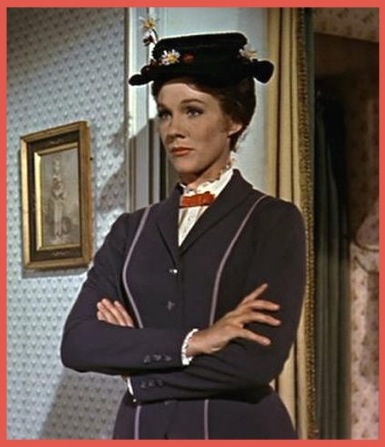
“A great friend of mine at the beginning of our friendship…said to me very defiantly, “I have to tell you that I loathe children’s books.” And I said to him, “Well, won’t you just read this just for my sake?” And he said grumpily, “Oh, very well, send it to me.” I did, and I got a letter back saying: “Why didn’t you tell me? Mary Poppins with her cool green core of sex has me enthralled forever.”

—P. L. Travers, interview, The Review, No. 86 (Winter 1982)


Disclaimer:  The views expressed in this random quote of the day do not necessarily reflect the views of the poster, her immediate family, Siegfried and Roy, Leonard Maltin, or the Mormon Tabernacle Choir. They do, however, sometimes reflect the views of the Cottingley Fairies.

1. “Stupid is not to be underestimated,” I told my friend J. “Stupid things can save your sanity when life is out of your control.” And it’s true. An hour or two of doing something silly and mundane and all yours is a precious thing. My most fervent hope for this evening is that I get to spend an hour alone in my sitting room watching a new episode of Ghost Hunters. If that happens, I will not think the day a total loss. If it doesn’t happen, then I will watch the tape during some other precious hour, and having DVR’d it, the day will not be a total loss. One has to stay flexible.

2. And speaking of flexible, I’ve lost roughly 30 pounds in the last month. (My God, has it only been a month? Feels like several weeks more than that.) I say roughly 30 pounds because I made a decision some time back to live without a scale, so that’s based on the last time I stepped on a doctor’s scale. I may have lost a bit of that before the current month, but I’ve definitely dropped a lot of weight since September 14. What do you know? Eating less and running around a lot do help you lose weight. Fewer aches and pains, too. I haven’t got time for them, so they’ve been banished to the aethyr.

3. I poked at my novel, The Numberless Stars yesterday. I don’t know if I have the energy/time to write new prose again, though. I thought of revising something already written, but I didn’t have the stomach for that. Sustained focus is difficult these days.

4. My mother decided to make mini cheese cakes because a friend is coming to dinner tomorrow. Mom has always been someone who loved feeding people—and overfeeding people. I encourage her to do things like this because it makes her feel better about herself, and stronger. I thought she’d make her usual dozen, but when I got home from work last night, she’d made three dozen and was in the process of making another two. “What??” I asked. “I decided to make some for the girls at the dialysis center, and some to send home with L. and some to send with you to work.” We didn’t finish up until about 9:30 last night. I’m glad she’s feeling better. It was not how I’d planned my evening, however. Flexible!

5. J. and I were just discussing the strange culture of tipping. I am usually a 20% straight across the board tipper. Service is hard work and I want people who do work for me/serve me to know that I appreciate that. (Plus, 20% is so much easier to calculate than, say, 18%.) I realize not everyone feels this way and some are scandalized at tipping over 15%, but these days that seems a little on the low side to me. I say this even though I am feeling something of an economic pinch these days myself. If I can’t afford the tip, I should not expect the service.

J. was saying how the first time he went to his barber it was Thanksgiving, so he gave him a larger tip than he otherwise would. The second time was Christmas, so again he gave a larger tip. Now he feels like he’s always got to give that same tip or risk insulting/hurting the man’s feelings. “If you’ve got a barber you like,” I said, “best not to make him mad.” J. concurred.

Jim Van Pelt wrote an interesting post today. Take a paragraph of writing—your own or a master like Fitzgerald—and arrange it like a poem. Immediately, the vibrancy (or lack thereof) of the writing pops out in ways it doesn’t when arranged as a paragraph.

I decided to try this with the opening of my novel Shivery Bones. Here’s the original, which I’d previously thought decent-enough:

Jolene’s earthquake passed through her midsection, rolled along her limbs, then off into the grass beneath her toes to make the ground shake. She fell, gasping with pain and surprise as the temblor radiated out from her and across the yard, the ground splitting like an overripe peach. The leaves of the trees along the high wall shook as if attacked by nerves, swaying and groaning. The wave crested inside Jolene, her personal shaking stopped. The earth and trees stilled a moment later, and the ground healed itself, closing as if no trembling had ever occurred.

However, when I arranged it as a poem, the dead parts really jumped out at me. It didn’t have life or flow, I thought:

Jolene’s earthquake
passed through her midsection,
rolled along her limbs,
then off into the grass
beneath her toes to make
the ground shake. She fell,
gasping with pain and surprise
as the temblor radiated out
from her and across the yard,
the ground splitting
like an overripe peach.
The leaves of the trees
along the high wall shook
as if attacked by nerves,
swaying and groaning.
The wave crested inside Jolene,
her personal shaking stopped.
The earth and trees stilled
a moment later, and the ground
healed itself, closing as if
no trembling had ever occurred.

******************************

Immediately, the tweaking began:

Jolene’s earthquake
rolled through her midsection,
vibrated along her limbs,
sloughing off into the grass
beneath her toes, the ground
beneath an echo of her own shaking.
She fell, gasping with pain
and surprise as the temblor
radiated from her and
across the yard, the earth
splitting like an overripe peach.
The leaves of the trees along
the high wall quivered as from an attack
of nerves, swaying and groaning.
The wave crested inside Jolene,
her personal quaking done.
The earth and trees stilled,
the ground healed itself,
closing as if no trembling
had ever occurred.

I don’t think this is a perfect paragraph by any means, but I do think it’s an improved one. It might be worth trying this techniques for openings and other troublesome passages:

Jolene’s earthquake rolled through her midsection, vibrated along her limbs, sloughing off into the grass beneath her toes, the ground beneath an echo of her own shaking. She fell, gasping with pain and surprise as the temblor radiated from her and across the yard, the earth splitting like an overripe peach. The leaves of the trees along the high wall quivered as from an attack of nerves, swaying and groaning. The wave crested inside Jolene, her personal quaking done. The earth and trees stilled, the ground healed itself, closing as if no trembling had ever occurred.

Random quote of the day:


“Writing is writing, and stories are stories.  Perhaps the only true genres are fiction and non-fiction.  And even there, who can be sure?”

—Tanith Lee, interview, Tabula Rasa, #4, October 1994


Disclaimer:  The views expressed in this random quote of the day do not necessarily reflect the views of the poster, her immediate family, Siegfried and Roy, Leonard Maltin, or the Mormon Tabernacle Choir. They do, however, sometimes reflect the views of the Cottingley Fairies.

I ran across this passage in Women Who Run With the Wolves the other day:

The most important thing is to hold on, hold out, for your creative life, for your solitude, for your time to be and do, for your very life; hold on, for the promise from the wild nature is this: after winter, spring always comes.

For me, it’s autumn.

I shake my feathers and the dust of the summer doldrums shifts away from them. Soon I’ll step into the cool, crisp waters of Fall and it will be washed away completely. I’ll slap my wings into the bath of autumn winds, dip my head, ruffle my feathers, and be off, on the wing again.

Summer has always been a trial for me. You know that Seasonal Affective Disorder thing? I always knew there was a summertime version of it, long before science tumbled to the fact. Every year, starting about late spring, I’d feel myself sinking. By full summer, I’d be slogging along through hot molasses. Then the seasons turned again and I’d be filled with incredible new energy that lasted through the winter and into early spring. I have always started new novels in the fall. That’s when they burgeoned inside me most naturally.

This year we had a mild summer, but the doldrums came anyway. It’s been a difficult year in other ways and I’ve been so exhausted I have hardly had time for that creative life. I thought many times of quitting altogether—but hey, anyone who’s known me long knows I’ve been down that path before. I spent most of the year doing revisions rather than creating new works. That weighed me down, too. But the spark always refuses to die, no matter how convinced I am that this time it will finally be extinguished. No matter how desperate I feel, how pushed into the earth I feel, that little light remains—and probably will until my bones are pushed into the earth.

I don’t yet know for sure that things will be okay, but I trust that little light. And I’m rising again. The wind may be crisp and cold, but once more it promises sure flight.

Sometimes, for your own sanity, you have to stop reading “How To” articles and blogs and go away somewhere else in your mind for awhile. Really. Stop reading. Save yourselves. You can always pick them up again in a week or a month or a year. You won’t miss anything of importance. It will all be recycled endlessly again and again and again.

This is somewhat related to today’s quote of the day.

Random quote of the day:


“When the writing is really working, I think there is something like dreaming going on. I don’t know how to draw the line between the conscious management of what you’re doing and this state. It usually takes place in the earlier stages, in the drafting process. I would say that it’s related to daydreaming. When I feel really engaged with a passage, I become so lost in it that I’m unaware of my real surroundings, totally involved in the pictures and sounds that that passage evokes.”

—John Hersey, The Paris Review, Summer-Fall 1986, No. 100


Disclaimer:  The views expressed in this random quote of the day do not necessarily reflect the views of the poster, her immediate family, Siegfried and Roy, Leonard Maltin, or the Mormon Tabernacle Choir. They do, however, sometimes reflect the views of the Cottingley Fairies.

Random quote of the day:
“Find a subject you care about and which you in your heart feel others should care about.  It is this genuine caring, and not your games with language that will be the most compelling and seductive element in your style.”

—Kurt Vonnegut, “How to Write With Style,” International Paper Co. “Power of the Printed Word” series, 1980


Disclaimer:  The views expressed in this random quote of the day do not necessarily reflect the views of the poster, her immediate family, Siegfried and Roy, Leonard Maltin, or the Mormon Tabernacle Choir. They do, however, sometimes reflect the views of the Cottingley Fairies.

Random quote of the day:


“Sometimes you’ve got to throw away a real pearl.  I think the law is, “Are we telling the story?”  If we’re not telling the story, if it’s a kind of indulgence, a character indulgence or a personality or a star indulgence, then we cut and move on.”

—Mel Brooks, “Mel Books just can’t contain himself,” OC Register, 9/7/07


Disclaimer:  The views expressed in this random quote of the day do not necessarily reflect the views of the poster, her immediate family, Siegfried and Roy, Leonard Maltin, or the Mormon Tabernacle Choir. They do, however, sometimes reflect the views of the Cottingley Fairies.

1. All writing lists are highly subjective. Including this one.

They tell you more about what the writer of the list has found useful than about what will be effective in your own process. This is true even of professionals with a long track record. There are exceptions to this as in all things, and humor is always an exception, but many top ten lists are about speaking forcefully and eschewing all counter-argument. The absolute and incontrovertible fact is, there is no right way to do the process of writing, there is only what is effective for the individual; i.e., that which helps you put words on paper/screen on a regular and ongoing basis.

2. Many people can teach you to be a better writer.

Proper use of grammar, the basics of classic story structure, putting of sentences together in a fashion which is less clunky can even be taught by some top ten lists. Some, in fact, are brilliant. However, only you can hone your craft, and no one can teach you how to find your own individual style. Once you have received the basics from others, you’re going to have to do most of the heavy lifting yourself, and that means writing and purging and purging and writing and writing and purging…

3. Top ten lists are a quick and easy way to fill up a blog post or otherwise make a deadline.

Sometimes they mean no more than that.

4. Even people with little to no publishing record, or a sketchy one at best, feel no compunction about taking off into the countryside with top ten lists.

The Top Ten Things Every Writer Should Know, The Top Ten Writing Myths, The Top Ten Things I’ve Learned About Top Ten Writing Advice Lists. I rest my case.

5. Many outliners—those who outline all stories before writing them—will tell you it’s the only way to be an effective and successful writer.

Pantsers—those who make their stories up as they go—will point to a long list of successful writers who are pantsers. Some outliners will say those successful writers who call themselves pantsers are lying. Believe whichever side pleases you. It doesn’t matter as long as your method helps you put words on paper/screen on a regular and ongoing basis.

6. Pantsers will sometimes tell you that the only way to be a true artiste is to be an organic writer; i.e., make your stories up as you go along.

Outliners will point to a long list of successful writers who are outliners. Don’t believe either side. Or, rather, believe both. Artistry is in the eye of the beholder, and more importantly, in the heart of the writer.

7. Writing a top ten list is a great way of procrastinating in other areas.

It’s about this point in every list that the compilers begin to realize that coming up with one of these things is not quite as easy as they thought. They begin padding the content and reaching hard for bullet points. Sometimes they list the entries in opposite order, with the top and strongest reason being last, in hopes of hiding the padding from the reader.

8. Some list makers like to speak in self-congratulatory absolutes.

But no one, no one does absolutism better than me. Never forget that. And never begin sentences with But or And.

9. Top ten lists like to bandy the word “pro” around quite a bit.

The implication being that if you can’t see the absolute wisdom being promulgated by the list it’s because you’re a rank amateur.

10. As a writing instructor of mine once said, “Avoid clichés like the plague.”

Top ten lists are a blogging and workshop cliché. They’ve been so overused that each new one adds to the overall ineffectiveness of the whole species. The best of them don’t try to overreach and may actually do some good. The worst spread more confusion in new writers as they are often contradictory and dismissive of Anything Not Me. You know that grain of salt people are always talking about? Take it whenever you see a top ten list on the horizon.

If I was giving serious advice here, I’d say something like, “Make a sincere and concerted effort to learn the basics of story structure and grammar, get yourself some good critiquing partners or join a writers group, listen to and selectively take the advice they give you, and keep writing. That’s the only list you really need to know.”

Of course, that’s a self-serving and absolutist statement, too, so…
« Previous PageNext Page »