writing


I sometimes find myself fretting about my characters and disappointing my readers. Will they be disappointed, I ask myself, in a story where the freak protagonist remains a freak at the end, not magically transformed into someone more attuned to mainstream standards of beauty and social standing? Not young and strong and thin and accepted. A glorious transformation definitely takes place for this particular character I’m thinking about, but it’s all internal—with maybe a glimmer of hope at the end.

For me, as a reader, that’s all I ask: the potential for a better tomorrow. I’m not a fan of unrelieved realism and tragedy and probably would never write that kind of a story. When I was young, I thought it the only way to achieve High Art, but I don’t think that so much anymore. And I’m not so much interested in High Art, either. Just good writing.

This protagonist I’m thinking about is being punished for her sins. Not in the narrowly defined Judeo-Christian sense—as often marketed by fundamentalists and evangelicals. I don’t consider things like who is twanging who in whatever manner to be a sin, so long as everyone is a consenting adult. Sin is a word I reserve for things like murdering, cheating, manipulating, driving companies into bankruptcy, costing thousands of jobs, and the losing/looting of pension funds and properties. Fortunately, my protagonist is not a hedge fund manager or a corporate raider, so the reader may be able to find some sympathy for her.

I have a penchant for complex and not completely sympathetic characters, though. Sometimes that works out, sometimes not. They don’t always act with shining heroism and at times are a bit unstable. Or shitheads. Readers don’t always like them. That’s my fault some of the time (all the time?), because I haven’t written them with sufficient courage. I haven’t had the nerve or the foresight to take an unattractive character (or character trait) to its logical extension. I’ve tried to hedge my bets, gambling that I can charm my way past the unlikeable bits with no diminishment of heroism. I’m afraid to let the reader actively dislike the character even for a short time. You can’t really do that, I don’t think. When someone is being a shithead, you have to let them be one. You do run the risk of alienating some readers, of them putting the story down and never going back, but if you’ve set the story up right, they may stick with you for the rest of the ride to see how things work out.

Or maybe it’s a question of doing the best writing you can, the most interesting characters, and letting them find their audience. A risky stratagem, given the vagaries of the market, but the only honest way I know of approaching this. In real life human beings are often contradictory, selfish, stupid, and yet they’re not bad people. They have the potential for redemption. Those are the people I’m interested in seeing in fiction, too. Oh yeah, a good shiny-smiled hero or heroine is fun to read sometimes, but most of the time I like yellow-toothed protagonists better.

And maybe this, too, is a question of skill. Perhaps the reader can accept their contradictions, their mean streaks, their lashing out if the skill of execution is right. I know I’ve read characters like that and not thrown the book across the room. Take, for example, Chess Putnam in Stacia Kane’s wonderful Downside Ghosts series. Chess is a complete mess, makes stupid and self-destructive decisions, is her own worst enemy—and yet I love her and love reading about her even when I’m cringing hard at what she does. I keep pulling for her to snatch her backside out of the fires she throws it into time and again. She isn’t every reader’s cup of tea, but she’s mine, and wonderfully flawed and makes for compelling reading. So, the point is not to make characters that will be acceptable to every reader, but to make the writing compelling enough that readers can still find something to hold onto. Have I learned that lesson yet? I don’t know—or I know that I haven’t pulled it off all the time. I’m still working on it.

You can’t please all readers all the time. That I know for true. Some will accept the well-written shithead, some never will. That’s a matter of taste. As for the writer writing these complex people, it’s a matter of writing and revising and revising and revising and finding the balance.

Yes, that’s the truth, and the answer to my question, I suppose.
Random quote of the day:


“Serious writers, I should say, are on the whole more vain and self-centered than journalists, though less interested in money.”

—George Orwell, “Why I Write”


Disclaimer:  The views expressed in this random quote of the day do not necessarily reflect the views of the poster, her immediate family, Siegfried and Roy, Leonard Maltin, or the Mormon Tabernacle Choir. They do, however, sometimes reflect the views of the Cottingley Fairies.

Random quote of the day:


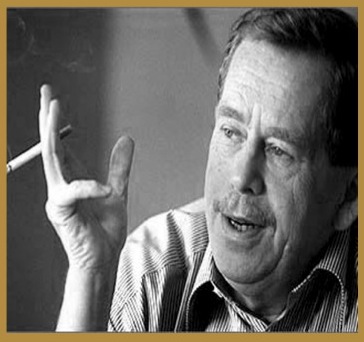
“I do not belong to that fortunate class of authors who write constantly, quickly, easily, and always well, whose imaginations never tire and who—unhampered by doubts of inhibitions—are by nature open to the world.  Whatever they touch, it is always right. That I do not belong in such company, of course, bothers me and sometimes even upsets me: I am ambitious and I’m angry with myself for having so few ideas, for finding it so difficult to write, for having so little faith in myself, and for thinking so much about everything that I often feel crippled by it.”

—Vaclav Havel, “Second Wind,” Open Letters and Summer Meditations


Disclaimer:  The views expressed in this random quote of the day do not necessarily reflect the views of the poster, her immediate family, Siegfried and Roy, Leonard Maltin, or the Mormon Tabernacle Choir. They do, however, sometimes reflect the views of the Cottingley Fairies.

Random quote of the day:


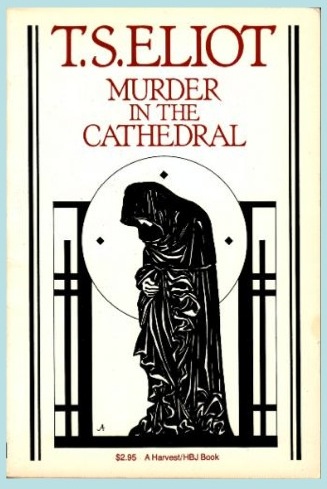
“I learned in Murder in the Cathedral that it’s no use putting in nice lines that you think are good poetry if they don’t get the action on at all.”

—T. S. Eliot, interview, The Paris Review, No. 21, Spring-Summer 1959


Disclaimer:  The views expressed in this random quote of the day do not necessarily reflect the views of the poster, her immediate family, Siegfried and Roy, Leonard Maltin, or the Mormon Tabernacle Choir. They do, however, sometimes reflect the views of the Cottingley Fairies.

Here’s a meme I picked up from shalanna (who didn’t follow The Rules either. :-D)
The Rules:
Go to page 77 of your current MS.
Go to line 7.
Copy down the next 7 lines/sentences and post them as they’re written.  No cheating.


The current MS. being Shivery Bones, the one I am editing since I’m not writing anything new at the moment…

Here’s page 77, but not line 7.  Hey, I’m a writer.  I find it impossible to post something without context, so you’re getting the whole paragraph starting from line 4 and ending where it would have if I started on line 7 at the end of the next paragraph.  They are posted as currently written, however.

In this scene, Juana in 14th century Cordoba, Spain, is dying of consumption and has no one reliable to care for her four-year-old son, Estevan.  She has just asked Fraile Diego Gonçales, a traveling friar, to care for the boy, and has been coughing up blood.

“Mama’s all right,” she told him in a strangled voice, and reached for the wooden ball he’d let drop. “Here’s your ball, sweetheart.” She let him off her lap, and cleaned her mouth and hands with the cloth as best she could. Estevan took the ball, but a vague worry wormed through his heart. He stole anxious glances at her.

The friar studied them long and hard, his face at war with itself: pity, chagrin, compassion, irritation. Finally, in a dry voice, shaking his head, he asked, “Why would you trust such a precious boy to a stranger like me?”


ETA:  There’s something about posting that makes all the icky stuff show up.

 
“Mama’s all right,” she told him in a strangled voice, and reached for the wooden ball he’d let drop. “Here’s your ball, toy, sweetheart.” She let him off her lap, and cleaned cleaning her mouth and hands with the cloth as best she could. Estevan took the ball, but a vague worry wormed through his heart. He stole anxious glances at her.

The friar studied them long and hard, his face at war with itself: pity, chagrin, compassion, irritation. Finally, in a dry voice, s Shaking his head, he asked, “Why would you trust such a precious boy to a stranger like me?”

Okay, so the plot of that novel is nothing like any of my vampire novels (all 3-1/2 of them), but there are certain elements in the worldbuilding which really sounded familiar:

  • A 1500-year-old vampire
  • A group of powerful supernatural being overlords called the Congregation (mine was the Covenant)
  • Vampires who can eat normal food but don’t, mostly because the smell is abhorrent (especially garlic)
  • Vampire growth spurts, in which the vampire gets larger and more of an apex predator after being “changed” from mortal
  • Other piddling things that slip my mind at the moment

Now, none of these elements are earth-shatteringly similar, but chances are that if any of my vamp novels sees some form of publication someone will surely think I’ve ripped off Ms. Harkness, even though I did this worldbuilding twenty years ago now. It no longer depresses me when this sort of stuff happens, no longer even irks me especially hard, because I have been through this same thing so many times before. Seriously, click on the “simultaneous invention” tag if you want to listen to more hardcore whining on this subject. No? Can’t say as I blame you.

The thing is, the concept of simultaneous invention is quite well-known in science. And if it’s true for the tech fields, it’s also true for creative fields. It happens all the time—to me, to my friends, to writers and artists of all sorts. It’s just the way the zeitgeist operates, propagating certain ideas into the culture when their time has arrived. Some individuals are quick to pick up on them and “get them to market,” while others (like me) are painfully slow about the whole thing or otherwise blocked from getting their version before the public eye time. As with Ms. Harkness and I, nothing sinister is involved, no one has stolen anything.

Most of the time. Ideas do get stolen. It’s happened (verifiably) to friends of mine, it’s happened to me—which is one of the reasons I decided I didn’t want to be involved with Hollywood anymore. But most of the time, I firmly believe it’s just a case of that ol’ zeitgeist playing with folks, hoping somebody will take the idea ball and run with it.

The strangest example of this for me happened about a year before Close Encounters of the Third Kind came out. I started working on this idea about a guy name Roy who was a state trooper. One night when he’s out on patrol on a lonely stretch of highway, he has a close encounter with a bunch of UFOs that radically changes his life. He loses his job, his marriage breaks up, and he spends the rest of his time obsessing about and trying to solve the mystery of these strange alien craft. Sounds familiar, huh? I never heard a word about the movie in production until I was about six months into the worldbuilding on my own idea. The thing that is really freaky to me is that both my character and the Richard Dreyfuss character in Close Encounters had the name of Roy. The zeitgeist was working overtime on that one.

So, onward. If I do publish any of the old vampire stuff, I’m sure there are many elements in my books that have been used in other (and many) books since I first came up with the concepts. They can’t help but be labeled “derivative.” I guess the answer is to just keep writing new things, to keep moving forward.

Oh, and what did I think of A Discovery of Witches? I quite loved it, despite the cliffhanger ending. Which is all I’ll say about that ending—but you have been forewarned.

I read a number of interesting things in the last week and it’s been difficult choosing “most interesting,” so I’ve settled on something of a smorgasbord. First up, two somewhat-related articles:

USS Monitor Faces

Nearly 150 years after they went down with their ship in a fierce Cape Hatteras storm, two members of the crew of the famed Civil War ironclad USS Monitor have come back to life in the form of newly created facial reconstructions.

Photobucket

The Ever-Amazing Ötzi

Since it was discovered in 1991, preserved in 5,300 years’ worth of ice and snow in the Italian Alps, the body of the so-called Tyrolean Iceman has yielded a great deal of information. Scientists have learned his age (about 46), that he had knee problems, and how he died (by the shot of an arrow).

Now, researchers have sequenced the complete genome of the iceman, nicknamed Ötzi, and discovered even more intriguing details. They report in the journal Nature Communications that he had brown eyes and brown hair, was lactose intolerant and had Type O blood.

Photobucket

Honorable mentions:

A Romani Mystery from Dr. Beachcombing’s Brizarre History

Scientists found Romani mitochondrial DNA in a cemetery in Norwich in East Anglia in use from the tenth to eleventh centuries when conventional wisdom says they didn’t arrive in England until the 17th century.

And Scott Turow on how lack of competition amongst booksellers hurts authors.

Random quote of the day:


“The time of longing in your life is beautiful. All possibilities are ahead of you. You think you want to make something happen, but when it does—you finally publish a story, you publish a book, someone reviews your book favorably—you realize that the bliss lies in the moment you pluck a metaphor from thin air. It lies in the time spent at your desk.”

—Patricia Henley, “The Potholder Model of Literary Ambition,” Glitter Train Bulletin 20, September 2008


Disclaimer:  The views expressed in this random quote of the day do not necessarily reflect the views of the poster, her immediate family, Siegfried and Roy, Leonard Maltin, or the Mormon Tabernacle Choir. They do, however, sometimes reflect the views of the Cottingley Fairies.

The books I’m reading (I pick these up and put them down, but all of these are currently inching forward):

  1. The Lone Ranger and Tonto Fistfight in Heaven by Sherman Alexie
  2. A Discovery of Witches by Deborah Harkness (the book du jour)
  3. Memories, Dreams, Reflections by C. G. Jung
  4. Trickster: An Anthropological Memoir by Eileen Kane
  5. Legends of the Fire Spirits by Robert W. Lebling
  6. Big Sur and the Oranges of Hieronymous Bosch by Henry Miller
  7. The Spirit and the Flesh: Sexual Diversity in American Indian Culture by Walter L. Williams
  8. When Ghosts Speak: Understanding the World of Earthbound Spirits by Mary Ann Winkowski
  9. and my own book Shivery Bones, doing one last bloody read-through.

Books I’m writing: If you count worldbuilding and creative noodling, then I’m writing Carmina and The Numberless Stars.  If you’re talking about actual words getting written, then I ain’t currently writting nothin’.

The book I love the most: Couldn’t possibly choose.  I usually love the one I’m with.

The last book I received as a gift: I made a killing on book gift certificates.  I’ve included all the books I bought this way—not really to brag, but because I wouldn’t want any of these books to have their feelings hurt because I left them off the list.  (I anthropomorphize everything.) (Hi, Lisa!):

  1. Caveat Emptor by Ruth Downie
  2. Holy Ghosts: Or, How a (Not So) Good Catholic Boy Became a Believer in Things That Go Bump in the Night by Gary Jansen
  3. Spooky California: Tales of Hauntings, Strange Happenings, and Other Local Lore by S. E. Schlosser, Paul G. Hoffman (Illustrator)
  4. Lover Unleashed by J. R. Ward
  5. Death Comes to Pemberley by P.D. James
  6. Red-Robed Priestess: A Novel (The Maeve Chronicles) by Elizabeth Cunningham
  7. Untie the Strong Woman: Blessed Mother’s Immaculate Love for the Wild Soul by Clarissa Pinkola Estes
  8. Meditations with Meister Eckhart by Matthew Fox
  9. Tarot for Writers by Corrine Kenner
  10. Crow Planet: Essential Wisdom from the Urban Wilderness by Lyanda Lynn Haupt
  11. Everyday Tarot by Gail Fairfield

The last book I gave as a gift: The Historian by Elizabeth Kostova.

the monthly first line writing contest run by Jaime Lee Moyer, also known as stillnotbored. The February contest will be up and running for the next week.

« Previous PageNext Page »